Introduction
Television hosting looks effortless on screen. A good host makes a live show feel relaxed, keeps guests talking, and connects with viewers at home. Behind that ease is preparation, practice, and patience. If you want to become a TV host in Pakistan, you do not need a famous name or a perfect accent to begin. You need a clear voice, genuine curiosity about people, and a willingness to practise in public, starting small and improving steadily.
Pakistan’s television industry is broad. News channels, morning shows, entertainment programmes, cooking shows, sports coverage, and children’s shows all need hosts, and each style is different. A morning show host is warm and energetic, a news anchor is calm and precise, and a sports host needs quick thinking and knowledge of the game.
What Does a TV Host Actually Do?
A host does much more than read from a script. Before a show, the host studies the rundown, researches guests, and prepares questions that go beyond the obvious. During the show, the host listens carefully, follows up on interesting answers, manages time, and keeps the programme moving.
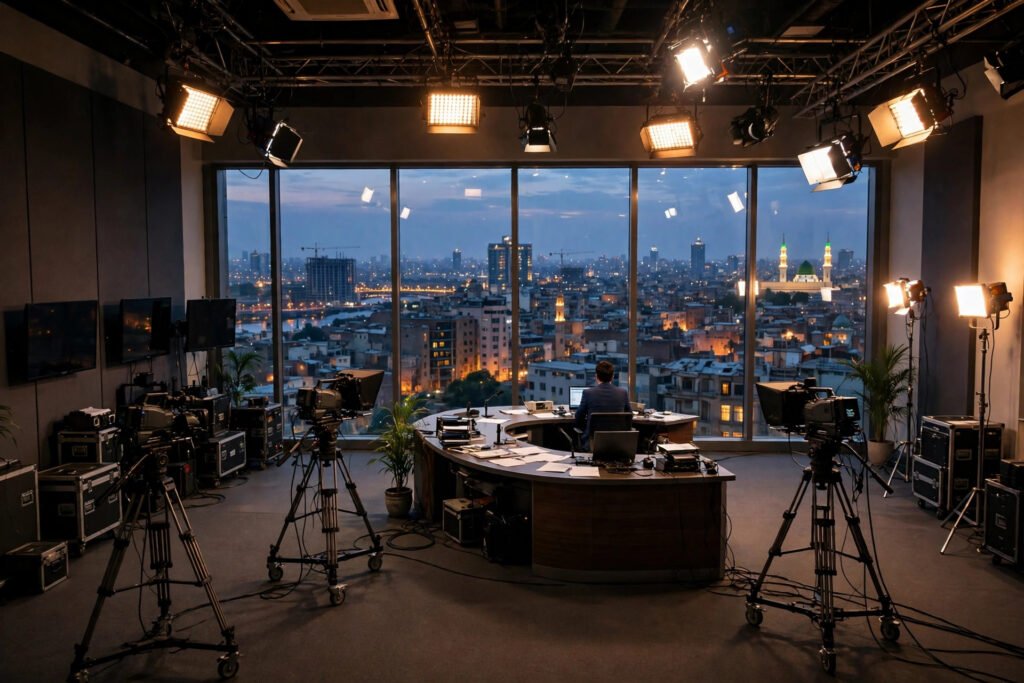
Hosts also work closely with producers, directors, and camera operators. On a live show, the host hears instructions through an earpiece while talking to a guest, which takes practice. Guests arrive late, technical problems happen, and topics change at short notice. A host who stays calm under pressure is valuable to any production team.
It helps to know the difference between an anchor and a host. News anchors mainly present bulletins in a formal style, while hosts usually run longer shows with guests, segments, and audience interaction.
Build the Core Skills First
Speaking clearly and naturally
Your voice is your main tool. Practise speaking slowly enough to be understood, with natural pauses instead of rushing. Record yourself introducing a pretend guest, then listen back and notice filler words, mumbling, or a flat tone. Reading aloud daily, even for ten minutes, improves pronunciation and confidence over a few months.
Many successful hosts in Pakistan switch comfortably between Urdu and English. You do not need to be perfect in every language, but being fluent and natural in the language of your target show is essential. Work on clear, neutral pronunciation without forcing an accent that is not yours.
Listening and asking good questions
Interviewing is mostly listening. A host who truly listens can ask a follow-up question that no one else thought of, and that is what makes an interview memorable. Practise with friends: ask about something they care about, listen without interrupting, then ask a question based on what they just said. Audiences can tell the difference between a real conversation and a mechanical list of questions.
General knowledge and camera presence
A host needs broad general knowledge: current affairs, sports, entertainment, and everyday topics viewers care about. Read newspapers and follow reliable news sources so you can hold a sensible conversation on many subjects. On camera, small things matter: eye contact with the lens, relaxed shoulders, and natural hand movements. Practise in front of a phone camera, watch experienced hosts, and develop your own style rather than copying someone else’s personality.
Education, Training, and Your Showreel
There is no single degree required to become a TV host, but relevant education helps. Degrees or diplomas in mass communication, media studies, or journalism give useful background, and short courses in broadcasting, voice training, and public speaking are available in major cities. Theatre groups, debating societies, university media clubs, and campus radio all build stage confidence too. What matters most to producers is evidence that you can perform on camera, not only a certificate.
A showreel is essential: a short video, usually two to three minutes, showing your best hosting moments. For a beginner, this can be recorded at home with a phone camera, good lighting, and clear audio. Include a short introduction, a mock interview, and a segment where you present a topic confidently. Match the showreel to the shows you want: warmth and energy for morning shows, a calm and serious style for news. Update it as you gain experience, replacing weaker clips with stronger ones. Keep a simple portfolio alongside it: a short biography, your showreel link, your experience, and your contact details, all honest.
Finding Auditions and First Opportunities
Auditions are announced through channel websites, social media pages, production companies, and media job listings. Follow the channels you admire and check their official pages regularly. Be cautious of anyone asking for payment in exchange for an audition or a role; genuine auditions do not charge a fee.
Your first opportunities may not be on a major channel. Local cable shows, university programmes, online shows, event hosting, and radio can all build confidence and material for your showreel. Many well-known hosts started with small events or behind-the-scenes work before their television break. Internships at channels or production companies are another useful route: even starting in research or production assistance teaches you how shows are made and introduces you to producers.
At auditions, prepare properly. Research the show and its audience, prepare a short introduction, and dress appropriately. Speak clearly, look at the camera when asked, and stay calm if you make a mistake; a small slip handled gracefully often impresses judges more than a perfect but stiff performance. After the audition, thank the team and move on. Rejection is normal, even for experienced hosts, so ask politely for feedback when possible and keep applying.
Frequently Asked Questions
Do I need a media degree to become a TV host?
No, a media degree is helpful but not compulsory. Producers care most about your on-camera ability, communication skills, and reliability. A strong showreel and real experience matter at least as much as a qualification.
How long does it take to become a TV host?
There is no fixed timeline. Some people get small opportunities within a year of serious practice, while others take several years of auditions, internships, and smaller hosting jobs. Consistent practice and regular auditioning improve your chances over time.
Is hosting only for people with a particular accent or look?
No. Channels need hosts with different styles, languages, and personalities for different audiences. Clear speech, confidence, and authenticity matter far more than fitting one narrow image.
Conclusion
Becoming a TV host in Pakistan is a realistic goal if you treat it as a skill to build rather than luck to wait for. Work on your voice, listening, general knowledge, and camera presence. Build a short, honest showreel, take small opportunities seriously, audition regularly, and learn from every rejection. Each step — a campus show, an event, an internship, a first television segment — brings you closer. Start where you are, practise consistently, and let your work speak for you.