Introduction
Learning the piano is one of the most rewarding hobbies you can start as an adult or a child in Pakistan. Unlike many instruments, the piano gives you instant feedback: press a key and you hear a clear note. That makes the first weeks encouraging, even if you have never read music before.
You do not need an expensive grand piano, a music degree, or years of free time to begin. You need a playable keyboard, a sensible practice routine, and patience for the first month, when your fingers are still learning where to go. This guide explains how to start learning piano in Pakistan, what equipment to buy, how to find a teacher or use online lessons, and how to practise in a way that actually sticks.
Step 1: Choose the Right Instrument
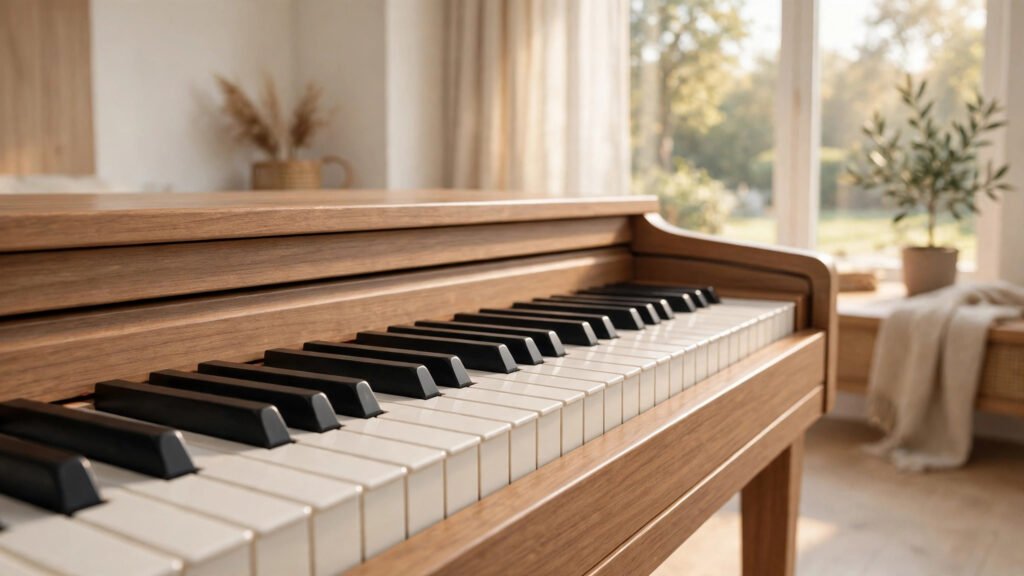
For most beginners, a digital piano or a full-size keyboard with 88 weighted or semi-weighted keys is the best starting point. It is far cheaper than an acoustic piano, it can be used with headphones so you do not disturb family or neighbours, and it needs no tuning.
If your budget is tight, a 61-key keyboard is acceptable for the first few months, but you will soon run out of keys as you play wider pieces. Avoid very small toy keyboards with unweighted, narrow keys, because they teach poor finger habits that are hard to undo later.
When buying in Pakistan, check the keys in a shop if you can. They should feel firm, return smoothly, and produce an even sound across the whole keyboard. Buy from a reputable music shop or online store with a return policy, keep the receipt, and test every key on the first day. A sustain pedal, a sturdy stand, and a comfortable bench or chair at the right height matter almost as much as the keyboard itself.
Step 2: Learn the Basics Before You Rush Ahead
Every beginner should start with the same foundations: the names of the white keys, the layout of the keyboard, correct hand position, and simple five-finger exercises. Spend your first two weeks on these basics, even if they feel slow. They are the groundwork for everything that follows.
Sit with your back straight, feet flat on the floor, and elbows roughly level with the keys. Curve your fingers gently, as if holding a small ball, and play with the tips of your fingers rather than flat fingers. Relax your shoulders. Tension is the most common beginner problem, and it causes tired hands and uneven playing.
Learn to read basic notation alongside playing by ear. You do not need to master theory at once, but recognising notes on the treble clef, understanding note values, and knowing the difference between major and minor chords will make every later lesson easier.
Step 3: Find a Teacher or a Good Online Course
A good teacher, even for one lesson a week, can correct hand position and timing problems before they become habits. In larger Pakistani cities such as Lahore, Karachi, and Islamabad, music schools and private teachers offer piano lessons for children and adults. Ask about the teacher’s experience with beginners, whether trial lessons are available, and what a typical lesson covers.
If no teacher is available near you, online lessons are a strong alternative. Video courses, live video lessons, and piano apps can all work, provided you follow a structured course rather than jumping randomly between videos. Look for a course that teaches reading music, scales, chords, and complete songs in order, and that includes practice assignments.
Step 4: Build a Practice Routine That Fits Real Life
Consistency beats long, occasional sessions. Thirty minutes a day, five or six days a week, will take you further than three hours once a week. Break each session into parts: five minutes of warm-up scales or finger exercises, ten minutes on new material, ten minutes reviewing older pieces, and five minutes playing something you enjoy.
Practise slowly first. Speed comes from accuracy, not from rushing. If a passage keeps going wrong, play it at half speed, hands separately, then together. Repeat the difficult bar several times, then move on. Short, focused repetition is far more useful than playing a whole piece badly from start to finish.
Set small weekly goals, such as learning one new scale, one chord pattern, or one short song. Keep a simple practice diary: date, minutes practised, and what you worked on. On busy days, even ten minutes of scales keeps the habit alive.
Step 5: Your First Songs and How to Progress
Start with simple melodies you already know, such as folk songs, national songs, or easy children’s tunes, then move to beginner arrangements of popular songs. Early wins matter: finishing a complete song, even a short one, builds confidence and motivation.
After a few months, add simple chords with the left hand while the right hand plays the melody. This is the skill that lets you accompany singing and play popular music. Later, learn major and minor scales and simple pieces from beginner collections.
Progress in piano is gradual, and plateaus are normal. If you feel stuck, go back to easier pieces for a week or ask your teacher to review your technique.
Common Beginner Mistakes to Avoid
Skipping warm-ups, practising only the easy parts of a piece, and ignoring rhythm are the three mistakes that slow beginners most. Use a metronome app, even at a slow tempo, to build steady timing. Count aloud when a rhythm feels difficult.
Another common mistake is buying an instrument that is too small or too cheap, then blaming yourself for poor sound. If your keyboard frustrates you, ask an experienced player or teacher to test it before you give up on the instrument altogether.
Finally, protect your hearing and your neighbours’ patience: use headphones for late practice, keep volume moderate, and agree on practice times with family or housemates, especially in shared homes and apartments.
FAQ
How long does it take to learn piano as a beginner?
Most beginners can play simple songs within two to three months of regular practice, and accompany basic songs with chords within six to twelve months. Steady daily practice matters more than talent.
Is it too late to learn piano as an adult in Pakistan?
No. Adults often progress faster than children because they understand practice routines and music theory more quickly. Many teachers in Pakistan teach adult beginners.
Do I need to learn to read music, or can I just play by ear?
Both skills help. Reading music lets you learn new pieces independently, while playing by ear helps with popular songs. Learn both, starting with basic notation.
How much should a beginner spend on a keyboard in Pakistan?
Prices vary widely, so set a budget, buy the best 88-key or at least 61-key keyboard you can afford from a reputable seller, and avoid toy keyboards. Test the keys before buying.
Conclusion
Learning piano in Pakistan is entirely possible with a decent keyboard, a structured course or teacher, and a realistic daily routine. Start with the basics, practise a little every day, and celebrate each finished song. The first month is the hardest part. Once your fingers know their way around the keys, playing becomes a pleasure you can enjoy for life, whether you play for family gatherings, for worship, for relaxation, or simply for yourself.