You have probably heard the phrase “Internet of Things” — usually shortened to IoT — but what does it actually mean, and does it have anything to do with life in Pakistan? The short answer is yes, and more than you might think. From a smart bulb in a flat in Lahore to a water sensor in a wheat field in Punjab, connected devices are quietly becoming part of everyday Pakistani life.
This guide explains IoT in plain language: what it is, how it works, where it is already used in Pakistan, and what you should know before buying a smart device.
What Is the Internet of Things?
The Internet of Things is a network of everyday objects — lights, fans, watches, fridges, cars, and farm equipment — that have sensors, software, and internet connectivity built in. These devices collect information about their surroundings, share it over the internet, and can be controlled or automated from a phone or computer.
The key word is “things.” The internet used to connect mainly computers and phones. IoT extends it to ordinary objects. A light that you can switch off from your phone is an IoT device. So is a fitness band that counts your steps and syncs them to an app, or a water tank sensor that sends you a message when the tank is full.
In simple terms, IoT has three parts: sensors that measure something like temperature, motion, or water level; connectivity that sends that information over Wi-Fi, mobile data, or Bluetooth; and action, where you or an app respond — for example by turning something on or off, or by receiving an alert. When these three parts work together, ordinary objects become “smart.”
IoT in Pakistan: Where It Is Already Being Used
IoT is not a distant future technology in Pakistan. It is already here, in several areas.
Smart Homes
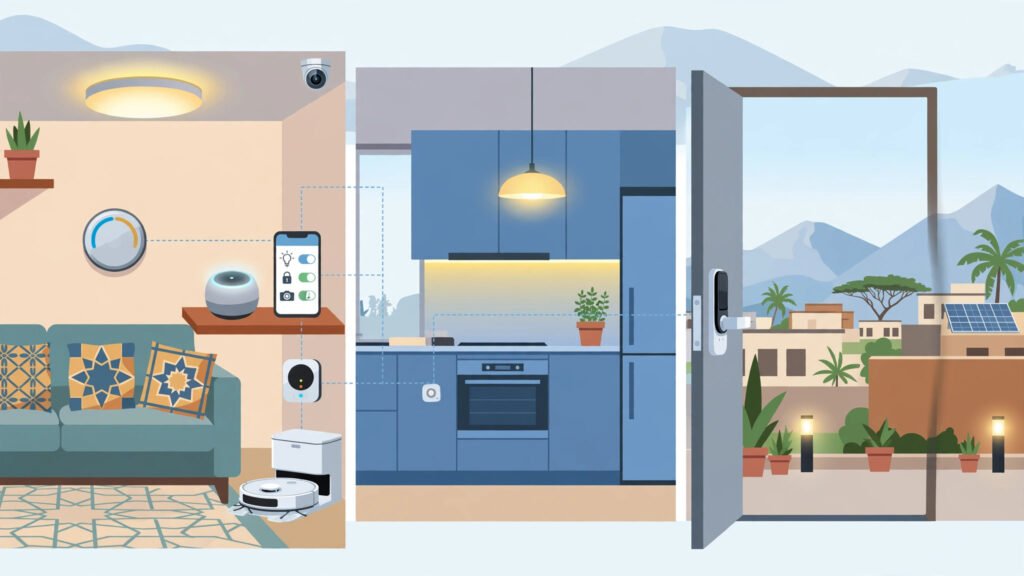
Smart bulbs, smart plugs, security cameras, and video doorbells are now sold in markets across Karachi, Lahore, and Islamabad, and through online stores. Many Pakistani families start with one or two devices — often a smart bulb or a Wi-Fi camera — and add more over time. Smart plugs are a popular first buy because they can turn an ordinary fan, iron, or water motor into a device you can control from your phone.
Farming and Agriculture
Agriculture is the backbone of Pakistan’s economy, and IoT has real potential here. Soil moisture sensors, weather stations, and automated irrigation systems help farmers water their crops only when needed, saving both water and electricity. In a country where water is precious and load shedding still affects tube wells, this kind of smart farming matters. Some agricultural universities and startups in Pakistan are already testing these systems on real farms.
Health and Fitness
Fitness bands and smartwatches are among the most common IoT devices in Pakistan. They track steps, heart rate, and sleep, and they sync with your phone. In hospitals and clinics, connected devices are also used to monitor patients and manage equipment, though this is still developing.
Transport and Energy
Ride-hailing apps, delivery tracking, and fleet management all depend on IoT — when you track a food delivery or share your live location, connected sensors and GPS are doing the work. Smart meters are also being introduced in parts of Pakistan, and many solar inverters now offer Wi-Fi monitoring.
Common IoT Devices You Can Buy in Pakistan
If you are curious about trying IoT, the devices most Pakistanis start with are smart bulbs, smart plugs, Wi-Fi security cameras, smart doorbells, fitness bands and smartwatches, and water level sensors that alert you when the tank is full or empty and can switch the motor off automatically.
Before buying, check that the device works with your home Wi-Fi and that its app is available in Pakistan. Some imported devices need a specific app or account that may not work smoothly here, so read reviews from Pakistani buyers first.
Benefits of IoT
The main benefits are convenience, savings, and safety. A smart home can reduce electricity waste by switching off lights and appliances automatically. A farmer can save water with sensor-based irrigation. A parent can check on home security from the office. For businesses, IoT can cut costs — a cold storage owner who gets an instant alert when the temperature rises can save an entire stock of goods.
Challenges and Things to Watch Out For
IoT is not without problems, and it is worth knowing them before you invest.
Internet dependence. Most IoT devices need stable Wi-Fi or mobile data. In areas with weak internet or frequent power cuts, some devices stop working until the connection returns. Choose devices that keep basic functions working offline where possible.
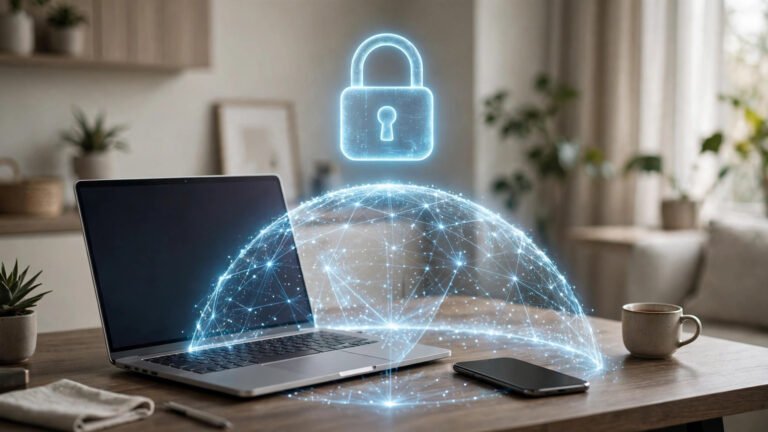
Privacy and security. A connected camera or microphone is only as safe as its password. Always change the default password, keep the software updated, and buy from reputable brands. Avoid very cheap, unbranded cameras with unknown apps.
Compatibility and support. Not all smart devices work with each other, so try to stick to one ecosystem or app. Some imported devices also have no local warranty or service centre in Pakistan, so check after-sales support before buying an expensive device.
Practical Tips for Beginners in Pakistan
- Start small. Buy one device, like a smart bulb or smart plug, and learn how it works before buying more.
- Secure your Wi-Fi. Use a strong Wi-Fi password. Your smart devices are only as safe as your home network.
- Update regularly. Install app and firmware updates when they appear — they often fix security problems.
- Keep the box and receipt. For warranty claims, you will need them.
- Think about load shedding. A UPS or solar backup keeps your router — and therefore your smart home — running during power cuts.
Frequently Asked Questions
Is IoT the same as a smart home?
Not exactly. A smart home is one use of IoT. IoT is the wider idea — it also covers farming, health, transport, and factories.
Do I need fast internet for IoT devices?
Most home IoT devices work fine on normal broadband or 4G. They use very little data. A stable connection matters more than a fast one.
Are smart devices safe to use in Pakistan?
Yes, if you buy reputable brands, use strong passwords, and keep software updated. Never use the default password that came in the box.
Can IoT work during load shedding?
Many devices stop working when the power goes out, unless you have a UPS or solar backup for your router. Battery-powered devices like fitness bands keep working but may not sync until the connection returns.
Conclusion
The Internet of Things is simply everyday objects connected to the internet so they can share information and be controlled remotely. In Pakistan, it is already part of smart homes, farming, health, transport, and energy — and it is becoming more affordable every year. Start with one small device, learn how it works, secure it properly, and build from there. The future of connected living in Pakistan is not far away — in many homes, it has already arrived.