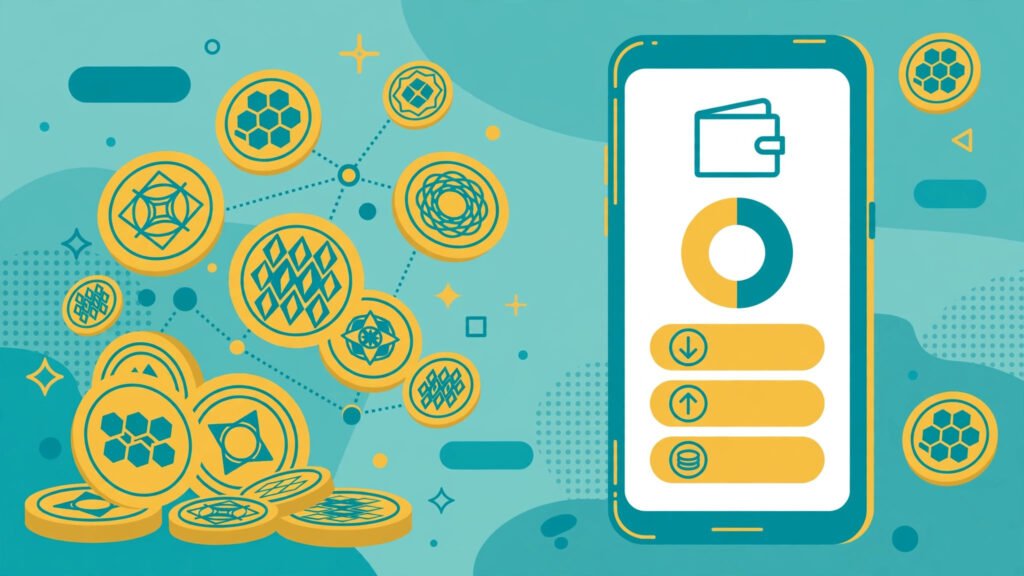
If you have ever looked at cryptocurrency and thought, “It goes up and down too fast for me,” you are not alone. That is exactly the problem stablecoins were created to solve: a stablecoin is a digital currency designed to keep a steady value, usually tied to the US dollar.
In Pakistan, where USDT comes up in freelance payments, remittances, and online trading, understanding stablecoins is useful. This guide explains what they are, how they work, their uses, and the risks.
What Is a Stablecoin?
A stablecoin is a digital currency whose value is “pegged” — tied — to something stable, most often the US dollar. The idea is simple: one stablecoin should always be worth about one US dollar. While Bitcoin and other cryptocurrencies can rise or fall sharply in a single day, a stablecoin is designed to stay roughly flat.
The word “stable” is the key. A stablecoin tries to combine the speed and convenience of cryptocurrency with the steady value of an ordinary currency. You can send it across the world in minutes, but its value does not swing wildly while you hold it.
How Does a Stablecoin Keep Its Value?
The most common method is backing by reserves. The company behind the stablecoin holds real assets — such as US dollars in a bank, or short-term government securities — and issues one stablecoin for each dollar it holds.
There are three main types. Fiat-backed stablecoins are backed by real currency reserves; USDT (Tether) and USDC (USD Coin) are the best-known examples. Crypto-backed stablecoins are backed by other cryptocurrencies held as collateral. Algorithmic stablecoins are not backed by reserves at all — they use computer programs to try to hold the price steady. This type has proved the riskiest, and some well-known algorithmic stablecoins have collapsed.
USDT and USDC: The Two Names You Will Hear Most
USDT (Tether) is the largest and most widely used stablecoin in the world. It is accepted on most crypto exchanges and by many freelancers and online sellers. If someone in Pakistan says they were “paid in USDT,” this is almost always what they mean.
USDC (USD Coin) is the second major stablecoin. It is issued by a regulated US company and is often described as more transparent about its reserves.
Both aim to stay at one US dollar, though the price can move slightly above or below a dollar for short periods. Neither is a guaranteed one-to-one promise.
What Are Stablecoins Used For in Pakistan?
Freelance payments. Many Pakistani freelancers who work for international clients receive part of their payment in USDT — for some clients, faster and cheaper than a bank transfer. The freelancer can then hold the USDT or convert it to rupees through an exchange or a peer-to-peer trade.
Remittances. Overseas Pakistanis sometimes use stablecoins to send money home. A transfer that might take days through a bank can arrive in minutes on a blockchain, often with a lower fee.
Holding value in dollars. Because the rupee has weakened against the dollar over the years, some Pakistanis see dollar-pegged stablecoins as a way to hold value in dollar terms — though the peg can break, the platform can fail, and converting back to rupees is not always simple.
Trading and online payments. Traders use stablecoins as a parking place between trades, and some international websites accept USDT — useful for Pakistanis without an international debit or credit card.
The Legal Situation in Pakistan
This is important: cryptocurrency is not formally regulated as legal tender in Pakistan. The State Bank of Pakistan has not recognised crypto as legal currency, and official guidance has at times warned banks and the public about dealing in it. Rules and enforcement can change.
So do not assume that using stablecoins is officially approved or protected. Check the current rules before buying, selling, or receiving crypto, and keep up with announcements from the State Bank of Pakistan. Keep records of any transactions. Never invest money you cannot afford to lose, and never borrow money to buy crypto. If you are unsure, talk to a qualified financial adviser rather than taking advice from social media groups. This guide is educational only — not financial advice, and not a recommendation to buy or use any stablecoin.
Risks and Scams to Watch Out For
Stablecoins sound safe because of the word “stable,” but they still carry real risks. The peg can break. A stablecoin can lose its link to the dollar — this has happened before. The company behind it can fail. A stablecoin depends on the company that issues it and the banks holding its reserves. Exchanges can be hacked or shut down, and if yours is, you may lose access to your funds.
Scams are common. Fake “double your USDT” offers and impersonators on WhatsApp and Telegram target Pakistani users every day. No genuine project will ask you to send USDT to “double” it, and no real support agent will ask for your wallet password or recovery phrase. Even if a stablecoin holds its dollar value, its value in rupees changes with the exchange rate. And crypto transfers are generally final — there is usually no bank or regulator who can reverse one.
Practical Safe Habits for Beginners
If you decide to learn more about stablecoins, keep these habits in mind: learn first, before buying anything. Use well-known platforms with a long track record, and turn on two-factor authentication with an authenticator app. Keep your recovery phrase offline — write it on paper, never in a screenshot, email, or chat. Send a small test amount before any large transfer, and do not keep large amounts on an exchange. Be sceptical of “guaranteed returns” — any scheme promising fixed daily profits from crypto is a red flag.
Frequently Asked Questions
Is USDT the same as a US dollar?
Not exactly. USDT is a digital token designed to track the value of one US dollar, but it is issued by a private company, not the US government.
Can I buy USDT in Pakistan?
USDT is available through international crypto exchanges and peer-to-peer trading. Because crypto is not formally regulated as legal tender in Pakistan, check the current rules and use only reputable platforms.
Is holding USDT safer than holding Bitcoin?
USDT is less volatile than Bitcoin in dollar terms, but it has different risks — the peg, the issuing company, and the platform you hold it on. “Less volatile” does not mean “safe.”
Can a stablecoin lose all its value?
It is rare for a major fiat-backed stablecoin, but it has happened to smaller and algorithmic stablecoins. No stablecoin is guaranteed by a government.
Conclusion
Stablecoins like USDT and USDC are digital currencies designed to hold a steady value, usually one US dollar. In Pakistan they are used for freelance payments, remittances, trading, and holding dollar-denominated value — but they are not officially recognised as legal tender, and they carry real risks, from broken pegs to scams and platform failures. Understand the risks first, check the current rules, and never invest money you cannot afford to lose. Stable does not mean risk-free.