Eid shopping is one of the happiest — and most expensive — times of the year for Pakistani families. New clothes for everyone, shoes, gifts for relatives, and food for guests can quickly eat up a month’s budget. The good news is that you do not need to spend a fortune to celebrate well. Here are ten practical tips that actually work in Pakistan.
1. Set a Budget Before You Step Out
Decide your total Eid budget before you start shopping, and divide it by category: clothes, shoes, gifts, and food. Write the numbers down on paper or in your phone. A budget turns vague spending into clear limits, and it stops the common mistake of buying a beautiful outfit first and realising too late that nothing is left for the children. If your budget is tight, decide what matters most — new clothes for the children, for example — and spend less on items that can wait.
2. Start Shopping Early
Prices rise as Eid approaches, because shops know that last-minute buyers will pay almost anything. Start shopping two to three weeks before Eid, when there is more stock, more choice, and more room to bargain. Early shopping also gives you time to compare prices in different markets instead of rushing into the first shop you find.
3. Make a List and Stick to It
Write a shopping list for every family member before you leave home, including sizes and the maximum price for each item. A list protects you from impulse buying — the extra shawl, the third pair of shoes, or the decoration you did not plan to buy. When you find something not on your list, pause and ask whether it is truly needed or simply attractive in the moment. If it is not needed, walk away.
4. Compare Prices in Different Markets
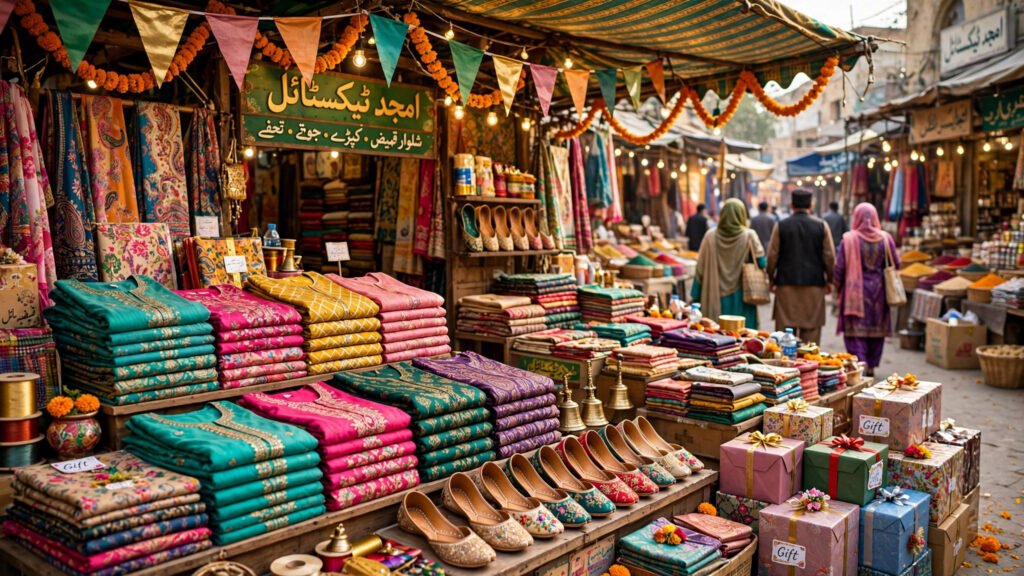
The same suit can cost very different amounts in different places. Wholesale markets and older bazaars usually offer lower prices than shopping malls, especially for unstitched fabric and children’s clothes. Visit two or three markets, or at least two or three shops, before buying anything expensive. Bargaining is normal in most Pakistani bazaars — politely ask for a better price, especially when buying several items from one shop. Online stores can also help you compare prices from home, but always check delivery charges before ordering.
5. Choose Unstitched Fabric and a Good Tailor
Ready-made clothes are convenient, but unstitched fabric plus a reliable tailor is often cheaper and fits better. Buy fabric from a wholesale market, choose a simple design, and give it to your tailor at least two weeks before Eid, because good tailors get booked up early. A simple, well-stitched suit looks smarter than an expensive ready-made one that does not fit properly. Keep designs simple, because heavy embroidery costs more in stitching and takes longer to finish.
6. Reuse, Mix, and Match
Not everything for Eid needs to be brand new. A good shawl, a waistcoat, or a pair of shoes from last year can look fresh with a new suit. Mix a new kurta with trousers you already own, or wear last year’s formal shoes with a new outfit. For children, hand down outgrown clothes in good condition to younger siblings or relatives, and buy new only where it is truly needed.
7. Shop Smart for Shoes and Accessories
Shoes and accessories add up faster than people expect. Buy one good pair of shoes per person instead of two average pairs, and choose a colour that matches several outfits. Check the stitching, sole, and fit carefully, because uncomfortable shoes ruin the whole day. For jewellery and accessories, simple pieces often look better than heavy sets, and they cost far less. Buy accessories after you have chosen your clothes, so you buy only what matches.
8. Buy Gifts Wisely, Not Expensively
Eid gifts for relatives and friends are a lovely tradition, but they do not need to be expensive to be appreciated. Homemade sweets, a small box of dates, or a thoughtful gift for a child often means more than a costly item chosen in a hurry. Set a fixed amount per gift and stick to it. Buy gifts in bulk where it makes sense — for example, the same useful item for several relatives — because bulk buying usually costs less per item.
9. Use Sales and Discounts Carefully
Many brands and online stores offer Eid sales, and a genuine discount can save real money. But a sale only saves money if you were going to buy the item anyway. A fifty percent discount on something you do not need is still wasted money. Compare the sale price with the normal price in other shops before deciding, because some “sale” prices are not actually lower.
10. Keep Some Money Aside for Eid Day
Eid itself brings expenses: Eidi for children, food for guests, and small unexpected costs. Keep a separate amount aside for Eid day, so you are not borrowing or overspending after the shopping is done. Give children a reasonable amount of Eidi and teach them to save part of it — it is a good lesson and it keeps your own budget safe. After Eid, note down what you spent in each category, so next year’s shopping is easier.
Frequently Asked Questions
How much should a family budget for Eid shopping in Pakistan?
It depends on family size and income, but a good rule is to set a fixed total first, then divide it between clothes, shoes, gifts, and food. Never spend money meant for rent, bills, or school fees on Eid shopping.
Is it cheaper to shop online or in bazaars for Eid?
Both can be cheap. Bazaars usually offer better prices for unstitched fabric and allow bargaining, while online stores help you compare prices and find sales. Compare both before you buy.
When is the best time to start Eid shopping?
Two to three weeks before Eid is ideal. Prices are usually lower, popular sizes are still available, and tailors still have time to stitch your clothes. Last-minute shopping is almost always more expensive and more stressful.
How can I save on Eid clothes for children?
Buy unstitched fabric and a simple design, shop early before popular sizes sell out, reuse good-quality clothes for younger siblings, and avoid buying more than one new outfit per child unless your budget comfortably allows it.
Conclusion
Eid shopping does not have to leave your wallet empty. Set a budget, start early, shop with a list, compare prices, and choose simple, well-fitting clothes over expensive ones. Reuse what still looks good, buy gifts thoughtfully, and keep a little money aside for Eid day itself. The joy of Eid comes from family, food, and celebration — not from how much you spent.