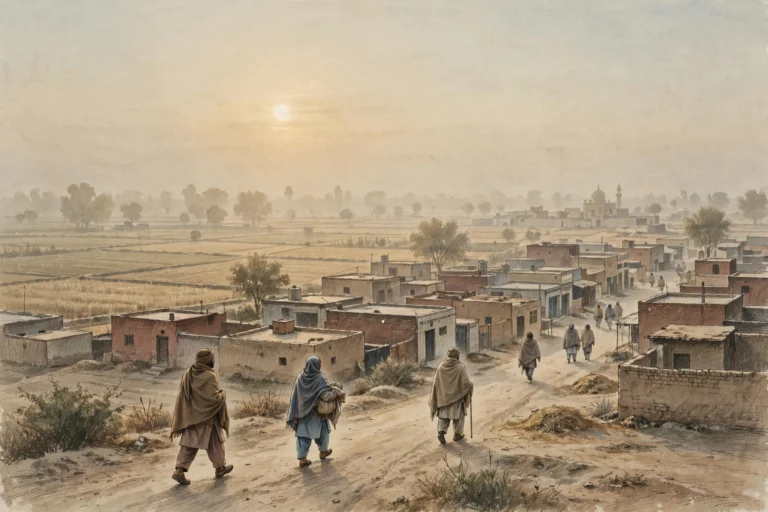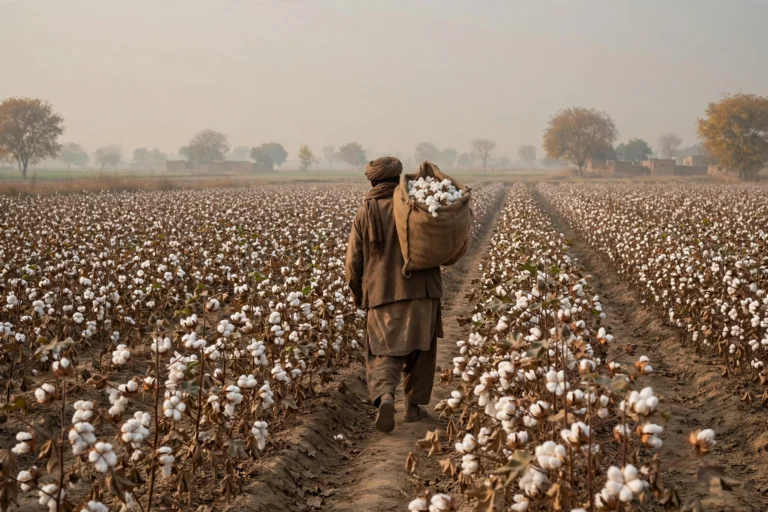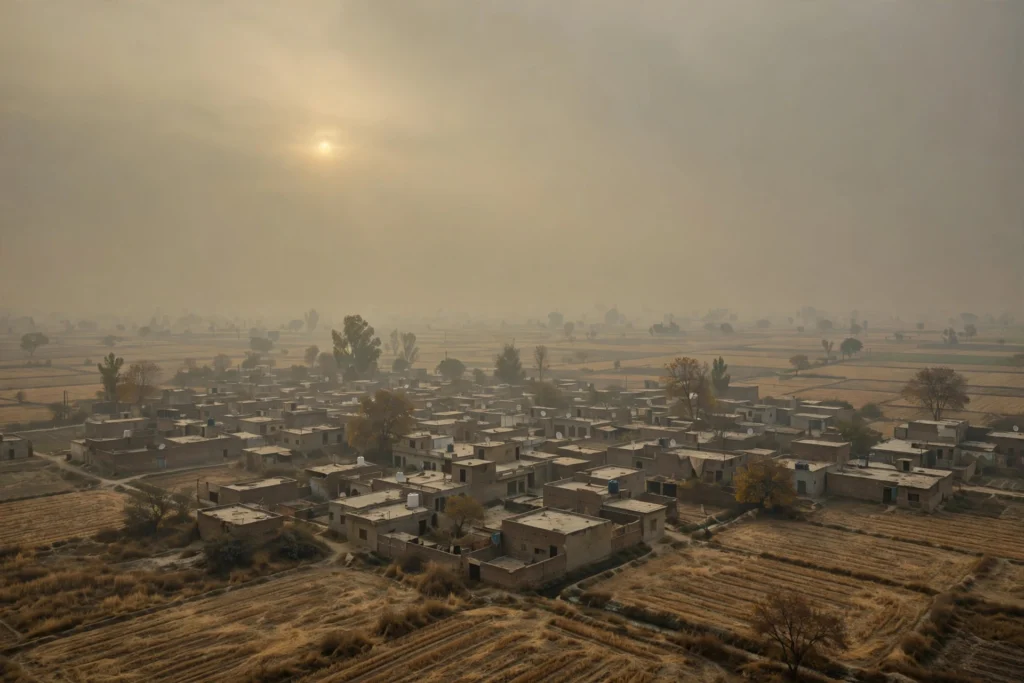
Jhang wakes up to another bright, dry Sunday morning on 1 November 2026 — and while the sunshine looks inviting, the air is the worst it has been in this run of weather staples, so the haze deserves to be taken seriously.
The morning begins sunny, with the temperature at 22°C around 9 AM. Humidity sits near 74 per cent at that hour, with a light south-westerly breeze of about 4 kilometres per hour, and the sun has been up since 6:26 AM. The official daytime high is 31°C, with an overnight low of 19°C.
Through the day the temperature climbs steadily. It reaches 25°C by 10 AM, 27°C by 11 AM and 28°C by midday, then 29°C at 1 PM and a peak of 30°C in the early afternoon, holding at 30°C through 3 PM under mostly sunny skies. By 5 PM it eases back to 28°C, and the evening stays clear, falling to 27°C by 6 PM, 24°C by 8 PM and 22°C by 11 PM. The sun sets at 5:21 PM.
There is effectively no chance of rain. The daytime rain chance is 0 per cent, rising only to 1 to 3 per cent in the evening and overnight, so outdoor work, travel, school runs and drying washing should all go ahead without wet-weather disruption. Winds stay light all day, shifting from south-westerly in the morning to easterly in the evening, and pressure stands at 1018 hectopascals and rising.
The headline change today is the air. The live Air Quality Index for Jhang Sadar stands at 210 this morning, in the “Very Unhealthy” band, with fine particulate matter (PM2.5) named as the main pollutant. That is a clear step worse than yesterday morning, when the same live source put Jhang at 174, in the “Unhealthy” band. It is also worse than the 191 recorded on the morning of 30 October, and above the 203 figure for 29 October on the Punjab government’s own air quality dashboard.
In practical terms, very unhealthy air means everyone can feel effects, and people with breathing or heart conditions, young children and older residents are most at risk. Keep strenuous outdoor exercise short, and wear a mask outdoors if you are in a sensitive group.
No official school-closure order for Jhang has been found this morning. Reports from 30 October were clear that, for Lahore too, no official closure announcement had been issued at the time of reporting, despite Lahore readings above 350. Parents in Jhang should therefore rely on official notifications from the Environment Protection Agency and the School Education Department, and on their own school’s instructions, rather than on rumours circulating on social media. If an order does appear, it will come through those official channels first.
For farmers, today matters for a different reason: the wheat-sowing window for irrigated areas opens today, 1 November, and runs to 20 November. The settled, rain-free weather suits field preparation and sowing, and yesterday’s article set out the department’s advice on certified seed, approved varieties and a seed rate of 40 to 45 kilograms per acre. The persistent haze, however, is a reminder that this is also peak smog season, and that stubble burning in the weeks ahead will only add to the smoke in the air. Managing crop residue without burning is, this season, both a farming choice and a public-health one.
Looking ahead, tomorrow, Monday, 2 November, is forecast to stay sunny with a high of 31°C and a low of 18°C, and again no rain. There is no sign of a proper rain spell that would wash the smog out of the air, so residents should plan on similar hazy conditions through the start of the week and keep the usual precautions in place.
In short: a sunny, dry Sunday at 31°C, a clear night down to 19°C, no rain — but very unhealthy air at AQI 210, the worst morning reading of the past four days. Enjoy the sunshine, but treat the haze seriously.
Source: weather.com live weather and forecast for Jhang Sadar, checked on the morning of 1 November 2026; Punjab air quality dashboard figures for 29 October 2026 as previously reported.