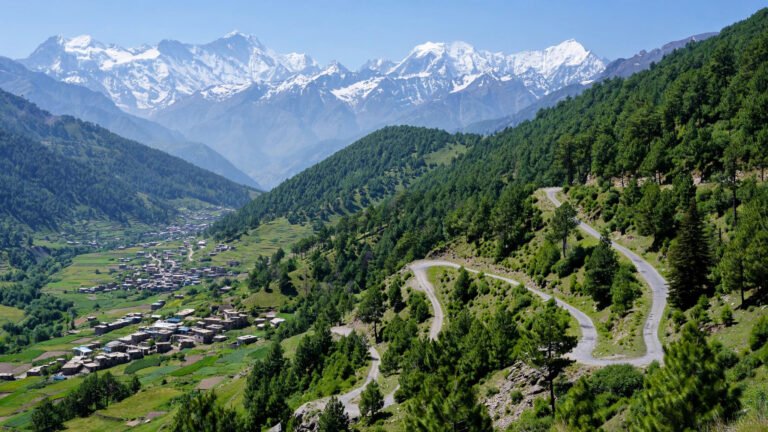
Few places in Pakistan live up to their name as completely as Fairy Meadows. This wide green meadow sits at about 3,300 metres in Diamer District, Gilgit-Baltistan, directly below the Rakhiot face of Nanga Parbat, the world’s ninth-highest mountain at 8,126 metres. On a clear morning, the mountain fills the whole sky above the pine trees. This guide covers the route, the best season, what to pack and how to stay safe.
Where Fairy Meadows Is and How the Journey Works
Fairy Meadows is reached from Raikot Bridge on the Karakoram Highway, about 80 kilometres south of Gilgit. The journey has three stages. From Islamabad, the drive takes roughly 11 to 13 hours, so most travellers stop overnight in Naran, Besham or Chilas. Flying to Gilgit and driving south is faster when flights run, though mountain weather can delay them.
At Raikot Bridge you switch to a local 4×4 jeep for the rough track up to Tato village, also spelled Tattu. The 15-kilometre track is narrow gravel cut into the cliffside, with no barriers, and the ride takes 1.5 to 2 hours. Only jeeps from the local drivers’ union may use this track, so you cannot take your own car, even a 4×4. Recent guides report the return fare at roughly PKR 15,000 to 20,000 per jeep, shared by five or six people; confirm the current rate before you travel.
From Tato village there is no road at all. You walk about 5 kilometres uphill through pine forest to the meadow, a climb of around 700 metres that takes most walkers 2 to 4 hours. Allow the full time, rest often and enjoy the forest. Ponies and porters can be hired at Tato if you need help with luggage.
The Best Time to Visit Fairy Meadows
The season runs from about May to September, when the jeep track is open and the lodges are operating. June to August is the warmest and greenest period, but also the busiest, and monsoon rain in July and August can bring landslides on the Karakoram Highway. September is widely recommended as the finest month, with post-monsoon clarity, the most reliable views of Nanga Parbat, cooler days and far fewer crowds. From about October to March, snow closes the trail and most lodges.
Where to Stay on the Meadow
Fairy Meadows has a small number of wooden lodges and campsites run by local operators, with simple rooms, shared bathrooms and home-cooked meals. Book ahead in peak season, because beds fill up quickly in June, July and August. Bring a warm sleeping bag or extra layers even in summer, since nights at 3,300 metres are cold. Electricity is limited and mobile signals are patchy, so charge your phone and power bank whenever you can and tell family at home that you may be out of contact.
What to Do Once You Arrive
The best activity at Fairy Meadows costs nothing: sit on the grass, watch the light change on Nanga Parbat and enjoy the silence. The classic walk is the gentle trail to Beyal Camp, about 3 kilometres and 1 to 2 hours from the meadow, which brings you closer to the mountain. Strong walkers can continue towards the Nanga Parbat base camp area, about 9 kilometres one way, as a full-day hike. Start early, carry water and snacks, and turn back in good time if clouds roll in. At night, the sky above the meadow is full of stars, so bring a torch and step outside after dinner.
What to Pack for Fairy Meadows
Pack light but pack properly. Sturdy walking shoes with good grip are essential for the forest trail, which is steep and slippery after rain. Bring a warm jacket, a rain jacket, a woollen cap, gloves and a sun hat, because mountain weather changes fast. Sunscreen, sunglasses and lip balm matter more at altitude than they do in the plains. A small daypack with water, dry fruit, biscuits, a first-aid kit and any personal medicine will serve you well. Cash is important, as there are no ATMs on the meadow, so carry enough rupees for your jeep, meals, lodging and tips.
Safety, Health and Mountain Manners
The jeep track has a well-earned reputation as one of the world’s most dangerous roads, so take it seriously. Sit calmly, hold on and avoid distracting the driver. On the trek, walk at your own pace and drink water regularly. At 3,300 metres, some visitors feel mild altitude effects such as a headache or shortness of breath, so ascend slowly and rest if you feel unwell. Check the weather and road conditions before you leave, especially in July and August. Respect the meadow: carry your litter back down, use the toilets provided and keep noise down at night.
Planning Your First Trip: A Simple Itinerary
A four-day plan works well for most first-time visitors. On day one, travel from Islamabad to Chilas or Raikot Bridge. On day two, take the morning jeep to Tato and trek up to the meadow in the afternoon. Spend day three walking to Beyal Camp, resting and watching the sunset. On day four, trek down to Tato, take the jeep back to Raikot Bridge and begin the drive home. Build in a spare day if you can, because mountain roads and weather can delay any plan. Travelling with friends keeps the jeep cost down, and hiring a local guide is sensible on a first visit.
Frequently Asked Questions
Is Fairy Meadows suitable for beginners?
Yes, if you are reasonably fit and take your time. The trek is a steady uphill walk, not a technical climb, and no special equipment is needed beyond good shoes and warm clothes.
How long does the trek from Tato take?
Most walkers take 2 to 4 hours for the roughly 5-kilometre trail. The descent is faster, usually 2 to 3 hours, but the path is steep, so go carefully.
Can I visit Fairy Meadows with children?
Older children who enjoy walking can manage the trek, but very young children will struggle with the climb and the altitude. Families often hire a pony for younger children.
Do I need a permit to visit Fairy Meadows?
Pakistani visitors do not normally need a special permit, but always carry your CNIC and confirm the latest requirements with your lodge or tour operator before travelling.
Conclusion
Fairy Meadows rewards every bit of effort it demands. The rough jeep track, the forest trek and the cold nights are all part of the experience, and they make the first sight of Nanga Parbat towering over the meadow feel truly earned. Plan your route, travel in the May to September season, pack warm clothes and good shoes, and give yourself enough days to enjoy the meadow without rushing.