Electric vehicles, or EVs, are slowly but surely changing how Pakistan moves. A few years ago, an electric car on a Pakistani road was a rare sight. Today, you can spot electric bikes in cities, BYD showrooms in major towns, and charging stations appearing along motorways. Pakistan still has a long way to go, but the shift has genuinely begun — driven by high petrol prices, new government policy, and big investments from car makers.
Why Electric Vehicles Matter for Pakistan
Pakistan imports a huge amount of petrol and diesel every year, and fuel imports cost the country billions of dollars. Every electric vehicle on the road means less imported fuel. EVs also produce no exhaust fumes, which matters in cities like Lahore, Karachi, and Islamabad, where air pollution and smog have become serious health problems, especially in winter.
For individual drivers, the main attraction is running cost. Electricity is much cheaper per kilometre than petrol, and an electric motor has far fewer moving parts than a petrol engine, which means less maintenance over time. The catch is the upfront price: electric cars still cost more to buy than similar petrol cars.
BYD and Local Assembly: The Big Story
The biggest name in Pakistan’s EV story is BYD, the Chinese company that is now the world’s largest maker of new energy vehicles. BYD has partnered with Mega Motor Company, a subsidiary of Hub Power Company (HUBCO), to bring its cars to Pakistan. Together, they are building a $150 million assembly plant at Gharo in Sindh, with a capacity of about 25,000 vehicles a year. First locally assembled vehicles are expected later in 2026.
Local assembly matters because it should bring prices down over time and create jobs in Pakistan. Imported cars carry heavy duties, but a car assembled in Pakistan can be sold more cheaply. BYD has been importing and selling its cars in Pakistan since early 2025 while the plant is completed.
Other companies are active too. More than 85 companies now hold licences to assemble or manufacture electric two- and three-wheelers in Pakistan, with local production capacity for electric motorcycles already above 290,000 units. Electric bikes and rickshaws — not cars — are the fastest-growing part of the EV market, because they are affordable and suit daily city travel.
The National Electric Vehicle Policy 2025-30
The government has set out its plan in the National Electric Vehicle (NEV) Policy 2025-30. The headline target is for 30% of new vehicle sales to be new energy vehicles by 2030 — that means electric and hybrid vehicles making up nearly a third of all new vehicles sold. The policy also aims for 3,000 charging stations across the country by 2030.
To encourage buyers, the policy includes subsidies of up to PKR 15,000 per kilowatt-hour for four-wheelers and PKR 65,000 for two-wheelers. There are also tax breaks for local manufacturers and lower duties on key EV parts such as batteries, motors, and chargers.
Charging Stations: The Network Is Growing
An electric car is only useful if you can charge it, and this is where Pakistan is playing catch-up. The government cut electricity tariffs for EV charging stations by 45% in January 2025, which made running a charging station much cheaper and encouraged private companies to invest.
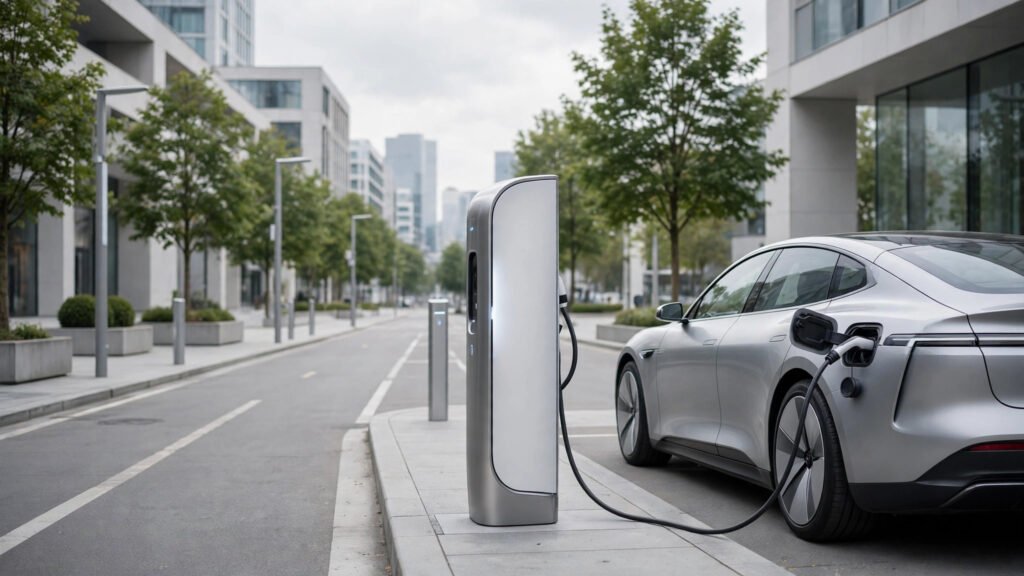
A charging corridor is being built from Karachi to Peshawar, with stations along the motorways so that long-distance EV travel becomes possible. BYD’s partner Hubco Green is building a network of 128 DC fast chargers across the country, with chargers planned every 150 to 200 kilometres on highways and at malls, hotels, and hospitals. Dozens of these stations are already operating. For now, though, charging is easiest in Karachi, Lahore, and Islamabad, and much harder in smaller towns and rural areas. Most EV owners in Pakistan currently charge at home overnight, which works well if you have a house with parking and a reliable electricity connection.
What EVs Mean for Ordinary Drivers
For a family thinking about buying a car, the honest picture is mixed. On the plus side, an EV costs far less to run day to day. Charging at home can cost a fraction of what the same distance costs in petrol, and there are no oil changes, no exhaust system, and fewer parts to break. EVs are also quiet and smooth to drive, which makes city traffic less tiring.
For most Pakistani drivers today, the most realistic first step into electric transport is a two-wheeler. Electric bikes and scooters are already affordable, cheap to charge, and well suited to short daily trips to work, university, or the market. For many families, an electric bike as a second vehicle makes more sense than an electric car right now.
The Challenges Pakistan Still Faces
It would be wrong to pretend the road ahead is smooth. Charging infrastructure outside the big cities is still very limited, which makes long-distance EV travel difficult. Electricity supply itself is a concern: load-shedding and high electricity prices in some areas make home charging less attractive. Upfront prices remain high for most families, and the subsidy schemes, while helpful, do not close the gap on their own. Car buyers and investors also want stable rules that do not change every year, and the industry has called for a consistent framework of at least ten years.
What to Check Before Buying an EV in Pakistan
If you are considering an electric vehicle, ask these questions before you decide. What is the real driving range on Pakistani roads, and how does it change with air conditioning in summer? Where is the nearest charging station to your home and your workplace, and can you charge at home? What does the warranty cover for the battery, and for how long? Is there a service centre in your city that can repair the car?
Frequently Asked Questions
Are electric vehicles cheaper to run than petrol cars in Pakistan?
Yes, in most cases. Electricity costs much less per kilometre than petrol, and EVs need less routine maintenance. The savings build up over time, though the higher purchase price means it can take a few years to come out ahead.
Can I charge an EV at home in Pakistan?
Yes, if you have a reliable electricity connection and a safe place to park. Most owners charge overnight using a home charger installed by the dealer or an electrician.
How far can an EV travel on one charge?
It depends on the model and battery size. Smaller electric cars and bikes cover shorter distances, while larger cars go further. Air conditioning, highway speeds, and hilly roads all reduce range, so treat the advertised figure as a best case.
Conclusion
Electric vehicles are changing transport in Pakistan, but the change is gradual. Local assembly by BYD and Mega Motor Company, a national policy targeting 30% of new vehicle sales by 2030, growing charging networks, and the rapid rise of electric bikes all point in the same direction. The challenges — price, charging outside big cities, and policy stability — are real, but they are being worked on.