Healthy eating has a reputation for being expensive. Imported oats, protein powders and fancy salads are out of reach for most Pakistani families, and it is easy to believe that a healthy diet needs a big budget. The truth is simpler: the healthiest foods in Pakistan are also some of the cheapest. Daal, chana, eggs, seasonal vegetables, whole wheat roti and fresh fruit have fed families for generations.
Why Healthy Eating Feels Expensive
The first problem is marketing. Shops and social media promote imported health foods as if they were the only way to eat well. The second problem is habit: when we are busy, it is easier to order fast food than to cook. The third problem is waste, because vegetables bought without a plan rot in the fridge and money is lost.
Healthy eating does not mean a perfect diet or expensive ingredients. It means mostly home-cooked food, plenty of vegetables and pulses, reasonable portions, and fewer fried snacks and sweet drinks.
The Cheapest Healthy Foods in Pakistan
Daal is the best value food in a Pakistani kitchen. Moong, masoor, mash and chana daal are rich in protein and fibre, keep you full for hours, and cost very little per meal. Chana and lobia are equally useful: soak them overnight, boil them, and use them in chaat, salan or salads through the week.
Eggs are the cheapest complete protein most families can buy. One or two boiled eggs with roti and a cup of doodh make a filling breakfast that keeps children full until lunch. Seasonal vegetables are the next bargain. Whatever is in season is always cheaper and fresher than out-of-season produce.
Whole wheat atta for roti is a staple for a reason: it is filling, affordable and far better than white bread or naan from the tandoor every day. For fruit, choose seasonal and local: bananas, Malta oranges and kinnow in winter, mangoes and falsa in summer.
Plan Before You Shop
The single habit that saves the most money is planning the week’s meals before going to the bazaar. Sit down for ten minutes, decide what the family will eat for the next few days, and write a list. Then shop from the list.
Buy in bulk where it makes sense. A sack of atta, a bag of rice and a few kilos of daal bought monthly are cheaper than buying small packets every week. But do not bulk-buy vegetables or fruit, which spoil quickly — buy those fresh, two or three times a week, in the quantity you will actually cook.
Cook in larger quantities and use leftovers well. A big pot of daal, a tray of sabzi and a stack of rotis can feed the family for two meals. Throwing food away is throwing money away, so plan portions honestly and store leftovers in covered containers.
Build a Healthy Plate, Desi Style
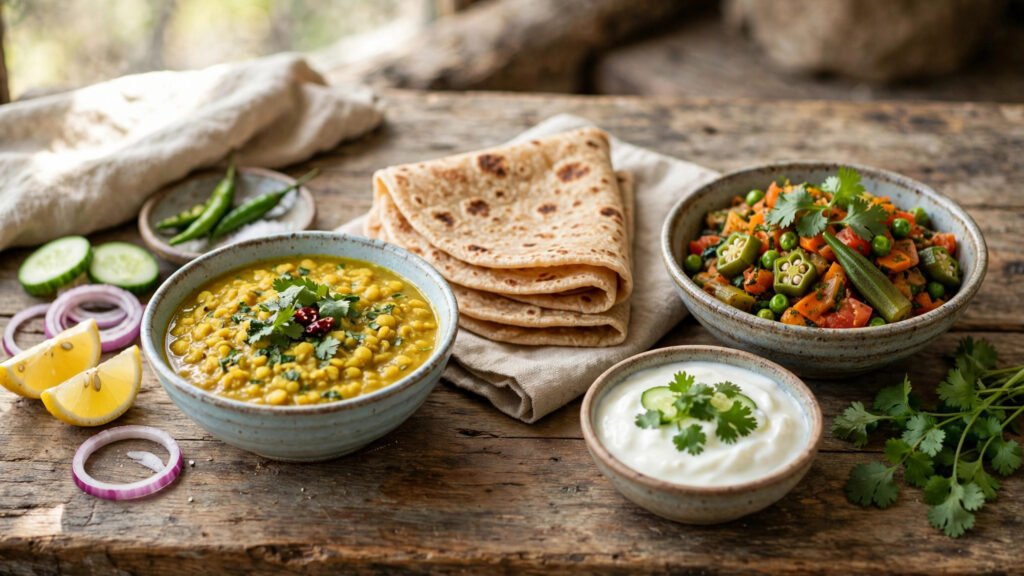
A healthy desi plate is simple to picture. Fill half the plate with vegetables or salad, a quarter with roti or rice, and a quarter with protein such as daal, chana, egg or chicken. This one habit — half vegetables, quarter roti, quarter protein — improves almost any meal without changing what the family likes to eat.
Drink water instead of sweet drinks. A bottle of cold drink with every meal is one of the most expensive and least healthy habits in a Pakistani household. Cut down on deep-fried snacks such as samosas, pakoras and namkeen, keeping them as an occasional treat rather than a daily habit.
Portion size matters as much as food choice. Serve food on smaller plates, eat slowly, and wait before taking a second helping. Many of us eat more than we need simply because the food is in front of us. Children learn their eating habits at home.
A Sample Low-Budget Healthy Day
Breakfast can be two boiled eggs or an omelette with one roti and a cup of doodh, or porridge made from whole wheat dalia with a little milk and a banana. For lunch, try daal with roti, a seasonal sabzi and a small bowl of dahi, with a salad of onion, tomato and cucumber on the side. Dinner can be chana or lobia salan with rice or roti and a vegetable dish. For snacks, keep roasted chana, peanuts, fruit or a glass of lassi instead of biscuits and crisps.
Mistakes to Avoid
The most common mistake is buying expensive health products instead of fixing the basics. Protein powder and imported cereals will not help if the family still drinks cold drinks with every meal and skips vegetables. Start with the basics: cook at home, eat vegetables daily, and drink water. The second mistake is skipping meals to save money. Skipping breakfast usually leads to overeating later and buying snacks on the way, which costs more in the end. The third mistake is cooking with too much oil and ghee: measure it with a spoon.
Frequently Asked Questions
Is it really possible to eat healthy on a low income in Pakistan?
Yes. The cheapest foods in a Pakistani kitchen — daal, chana, eggs, seasonal vegetables and whole wheat roti — are also among the healthiest. Cook at home, eat vegetables daily and avoid fizzy drinks and fried snacks.
What is the cheapest healthy breakfast for a Pakistani family?
Boiled eggs or an omelette with roti and a cup of doodh is hard to beat for price and nutrition. Whole wheat dalia porridge with milk and a banana is another cheap, filling option that suits both adults and children.
How can I make my children eat vegetables?
Mix vegetables into foods they already like, such as daal, pulao or parathas, and eat vegetables yourself at every meal. Children copy what they see at home.
Do I need supplements or protein powder to eat healthy?
For most healthy people, no: a normal desi diet already provides good nutrition. If you have a medical condition, are pregnant, or feel unwell, talk to a doctor before taking any supplement.
Conclusion
Eating healthy on a low budget is not about imported foods or strict diets. It is about using the affordable foods our kitchens already have: daal, chana, eggs, seasonal vegetables, roti and dahi. Plan your meals, shop from a list, cook at home, fill half the plate with vegetables, and drink water instead of sweet drinks.