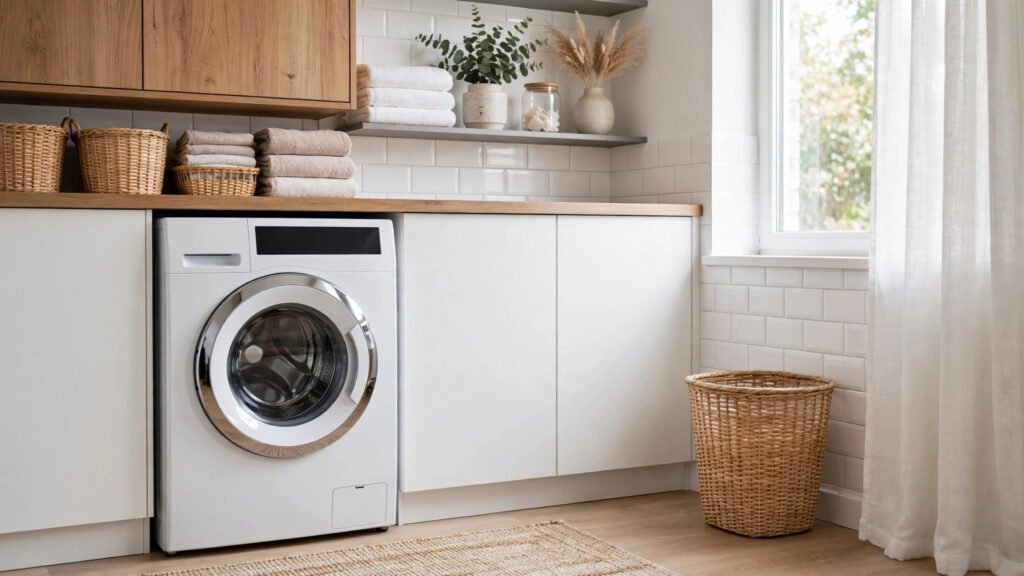
A washing machine is one of the most-used appliances in a Pakistani home. It runs several times a week, handles everything from school uniforms to heavy winter bedding, and is expected to last for years. Choosing the right one therefore deserves more thought than simply picking the cheapest model on display. This guide explains the main types, how to choose the right capacity, which features genuinely matter, and what to check before you pay.
The Main Types of Washing Machines
Semi-automatic machines
Semi-automatic machines have two tubs — one for washing and one for spinning — and you move clothes between them yourself. They are generally more affordable, use less electricity, and allow you to add water manually, which is useful in areas with low water pressure or irregular supply. The trade-off is more effort: you must be present during the cycle, and they usually need more floor space because of the twin-tub design.
Fully automatic top-load machines
Fully automatic top-load machines do the whole cycle — wash, rinse and spin — without intervention. You load clothes from the top, add detergent, select a programme and walk away. They are convenient, relatively easy to load, and widely available in Pakistan. They typically use more water than front-load models, but for most families they offer a good balance of convenience and value.
Fully automatic front-load machines
Front-load machines load from the front and tumble clothes rather than agitating them. They are generally gentler on fabric, use less water, and often offer more wash programmes, including options for delicates and wool. They usually cost more upfront and need a stable water supply and adequate pressure to work well. They are a strong choice for families who wash delicate or embroidered clothes regularly and want better water efficiency.
There is no single best type for everyone. Your choice should depend on your budget, water supply, available space, and how much hands-on involvement you are willing to have in each wash.
Choosing the Right Capacity
Capacity is measured in kilograms, and it refers to the dry weight of clothes the machine can wash in one load. Choosing the wrong size is a common mistake: too small, and you will run endless loads; too large, and you waste water and electricity on half-empty cycles.
As a general guide, a small household of one to three people can manage well with a smaller machine, while a medium family of four to five people usually needs a mid-size machine. Larger joint families, or households that wash heavy items such as blankets, curtains and winter shawls, will benefit from a larger capacity. If you wash bedding regularly, check that the drum can comfortably hold a double bedsheet or a light quilt without packing it tightly — clothes need room to move for a proper clean.
Think about your actual laundry habits, not just family size. A family that washes daily needs less capacity than a family that washes twice a week in large batches. Also measure the space where the machine will stand, including doorways it must pass through on delivery day, before you buy.
Key Features Worth Considering
Modern machines come with many features, but only some make a real difference in daily use. A range of wash programmes is genuinely useful — look for normal, quick wash, heavy or bedding, and gentle or delicate options. A quick wash is valuable for lightly soiled daily clothes, while a heavy programme helps with towels and bedding.
Spin speed matters for drying time. A faster spin removes more water, which is helpful in winter or during humid weather, but very high spin speeds can be harsh on delicate fabrics, so variable spin control is useful. Child lock prevents settings being changed mid-cycle, a delay-start option lets you run the machine at a convenient time, and a remaining-time display helps you plan around the cycle. For areas with voltage fluctuations, ask the seller whether the model handles voltage variation well or whether a stabiliser is recommended.
Features such as steam wash, in-built heaters and smart connectivity can be useful, but weigh them against cost. A heater helps for hot-water washes in winter, but if you rarely use hot washes, it may not justify a higher price. Focus first on capacity, build quality and the programmes you will actually use.
Water, Electricity and Running Costs
The purchase price is only part of the cost. Water and electricity use over years of washing can add up, so efficiency matters. Front-load machines generally use less water per wash, while top-load and semi-automatic machines vary. If your home relies on a water tank or faces supply constraints, water efficiency should be a priority.
Electricity use depends on the motor, the programmes you choose and how often you wash. Washing in cold or warm water rather than hot, using full loads rather than many small ones, and using the quick wash for lightly soiled clothes can all reduce running costs. Check the energy information provided with the model, and ask the seller about typical consumption for normal programmes.
Also consider detergent. Fully automatic machines generally work best with detergent made for automatic machines, which produces less foam. Using the right detergent protects the machine and improves cleaning, while using too much does not clean better and can leave deposits in the machine.
Frequently Asked Questions
Which type of washing machine is best for a Pakistani home?
It depends on your water supply, budget and habits. Semi-automatic machines suit tight budgets and low-pressure areas, top-load automatics offer convenience for most families, and front-load machines suit those who want water efficiency and gentler washing for delicates.
What capacity should a family of five choose?
A medium to large capacity machine usually suits a family of five, especially if bedding is washed at home. Consider your washing frequency as well — families who wash in large batches need more capacity than those who wash daily.
Does a higher spin speed damage clothes?
Very high spin speeds can be harsh on delicate fabrics, but most machines let you adjust spin speed by programme. Use lower speeds for delicates and higher speeds for towels and bedding.
Is an in-built heater necessary?
A heater is useful if you regularly wash in hot water, particularly in winter. If you mostly wash in cold or warm water, it is a nice extra rather than an essential feature.
Conclusion
Choosing a washing machine in Pakistan comes down to matching the machine to your home: the right type for your water supply and budget, the right capacity for your family and laundry habits, and the features you will genuinely use. Check build quality, warranty and local service before you buy, and look after the machine once it is home. A careful choice now will save you time, water, electricity and frustration for years to come.