Long hair is admired across Pakistan, but keeping it healthy takes more patience than growing it. Length means older, more fragile ends, more tangling, and more exposure to sun, dust, humidity and hard water. A routine built around gentleness rather than expensive products will usually do more for your lengths than any single miracle treatment.
This guide covers the basics: how to wash, oil and protect long hair in Pakistani conditions, and which everyday habits quietly cause the most damage.
Washing Long Hair the Gentle Way
Washing is where much long-hair damage begins. Long strands tangle easily when wet, and rough handling during a wash can snap them. Start by detangling dry hair gently with a wide-tooth comb before you step into the shower. This one habit prevents many knots from forming in the first place.
Use lukewarm water rather than very hot water, which strips natural oils and leaves hair rough. Apply shampoo mainly to the scalp, where oil and build-up collect, and let the lather run down the lengths as you rinse. Scrubbing the lengths themselves is unnecessary and causes friction.
Conditioner is essential for long hair. Apply it from the mid-lengths to the ends, leave it for a few minutes, and detangle gently with fingers or a wide-tooth comb while it is in. Rinse with cool or lukewarm water. How often you wash depends on your scalp: oily scalps may need washing every second day, while dry scalps may manage comfortably with two washes a week.
Oiling: Tradition That Still Works
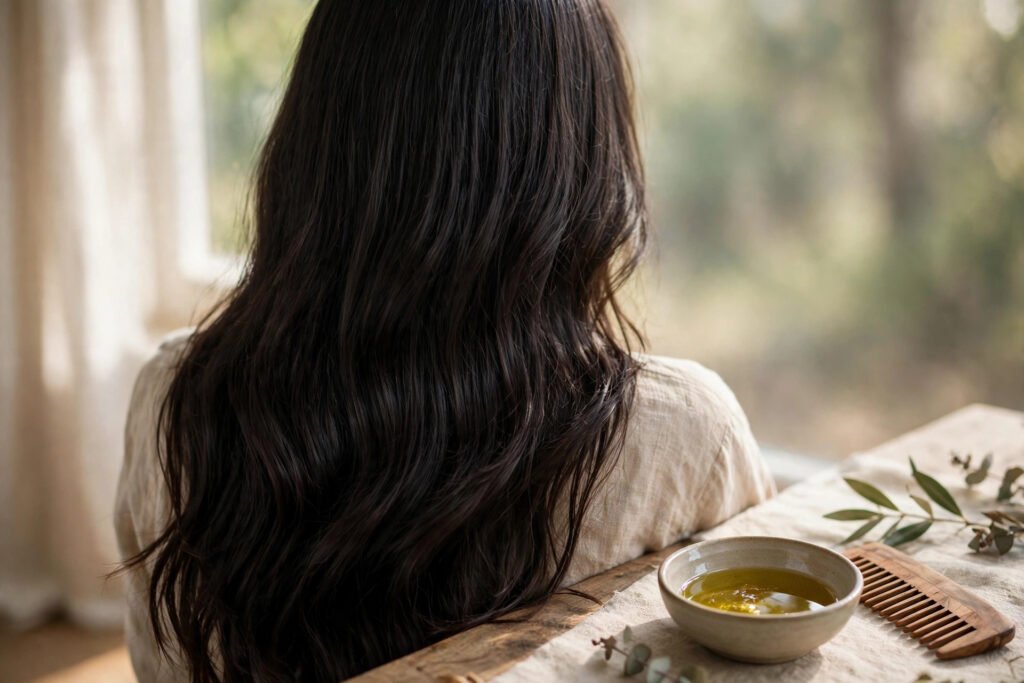
Hair oiling is a long-standing tradition in Pakistani households, and it has real benefits when done sensibly. Oil reduces friction between strands, helps the hair shaft retain moisture, and makes detangling easier. It is particularly useful for dry, thick or wavy long hair.
Coconut oil suits many hair types and penetrates the shaft well. Mustard oil is traditional in many families but can feel heavy and strong-smelling, so it suits thicker hair better. Almond and olive oils are lighter options. Choose one oil rather than mixing many, and warm a small amount between your palms before applying.
Apply oil to the lengths and ends, and only lightly to the scalp if your scalp is dry. Leave it for an hour or two, or overnight if you prefer, then wash out with a gentle shampoo.
Protecting Long Hair From Damage
Long hair faces damage from many directions. Heat styling is one of the biggest. Straighteners, curling tools and high-heat blow drying weaken the hair shaft over time, especially at the ends. If you style with heat, use the lowest effective setting, keep the tool moving, and use a heat-protectant product. Give your hair heat-free days whenever possible.
Sun and dust also take a toll, particularly in Pakistani summers. Covering hair with a dupatta or scarf outdoors reduces sun exposure and keeps dust out. After a dusty day, a gentle wash and conditioner restore softness.
Tight hairstyles cause a different kind of damage. Very tight ponytails, braids and buns pull at the roots and can break strands along the hairline. Vary your styles, use soft fabric hair ties instead of rubber bands, and avoid sleeping with tightly tied hair. A loose braid at night is one of the simplest ways to prevent overnight tangling.
Chemical treatments, including colouring, rebonding and repeated bleaching, weaken long hair significantly. If you colour your hair, space treatments out, condition deeply afterwards, and trim regularly to remove the most damaged ends.
Trimming, Detangling and Night Care
Many people avoid trims because they want length, but regular trims actually protect length. Split ends travel upwards if left alone, forcing a bigger cut later. A small trim every couple of months removes damaged ends and keeps the hair looking thick rather than wispy.
Detangling deserves patience. Always start from the ends and work upwards in small sections, using a wide-tooth comb or a detangling brush. Never rip through knots from the roots downwards, and avoid brushing soaking wet hair aggressively. If a knot resists, work it apart with your fingers and a little conditioner or leave-in product.
Night care is often overlooked. Cotton pillowcases create friction that roughens long hair overnight. A satin or silk pillowcase, or wrapping hair loosely in a soft scarf, reduces breakage. Never sleep with wet hair tied tightly, since wet strands are at their weakest and most likely to snap.
Eating and Living Well for Hair Health
Hair is made mostly of protein, and general nutrition supports healthy growth. A balanced diet with adequate protein, iron and vitamins helps, though no food can instantly transform damaged ends. Severe crash dieting, illness and major stress can all affect shedding, so sudden heavy hair fall deserves a doctor’s attention rather than a new shampoo.
Practical Tips for Healthier Lengths
- Detangle before washing, and always work from the ends upwards.
- Keep shampoo on the scalp and conditioner on the lengths and ends.
- Oil once a week with a single oil suited to your hair type.
- Protect hair from sun and dust with a light covering outdoors.
- Trim split ends regularly instead of waiting until damage spreads.
Frequently Asked Questions
How often should I oil long hair?
Once a week suits most people. More frequent heavy oiling can cause scalp build-up and force extra washing, which damages hair rather than helping it.
Is it better to wash long hair with hot or cold water?
Lukewarm water is best for washing, with a cooler rinse if you like. Very hot water strips oils and roughens the hair cuticle.
Should I brush long hair when it is wet?
Avoid aggressive brushing of wet hair, since wet strands stretch and break easily. Detangle gently with a wide-tooth comb, preferably while conditioner is in.
Do trims really help hair grow longer?
Trims do not speed up growth from the scalp, but they prevent split ends from travelling upwards, so you keep more healthy length over time.
Conclusion
Caring for long hair in Pakistan is less about buying new products and more about building gentle habits: careful washing, weekly oiling, protection from heat, sun and tight styles, and regular small trims. Length rewards patience. Treat the ends kindly, protect hair from daily friction, and give any new routine a few weeks to show results. Healthy long hair is not grown overnight, but with steady care it is well within reach.