Curly hair can be a great advantage for Pakistani men, because it naturally adds volume, texture and character that straight hair often lacks. The problem is that many barbers cut curly hair as if it were straight, and many men fight their curls with daily straightening instead of working with them. The result is frizz, uneven shape and frustration. This guide covers the best curly hairstyles for Pakistani men, how to choose one for your face shape and lifestyle, and simple care habits that keep curls healthy in Pakistan’s heat, humidity and dust.
Understand Your Curl Type First
Not all curly hair is the same. Some men have loose waves that fall softly, others have tight curls that spring up, and others have a mix of both. Loose waves suit longer, layered styles, while tight curls suit shorter, shaped cuts that control volume without removing texture. Before visiting a barber, wash and dry your hair naturally, without heavy gel or straightening, and take a photo in daylight. Show the barber your natural curl pattern, not a photo of straight hair you wish you had. A good barber for curly hair cuts dry or slightly damp hair, follows the curl pattern, and removes bulk carefully rather than thinning aggressively, which can cause frizz.
Best Curly Hairstyles for Pakistani Men
The curly crop is one of the most practical choices. Hair is kept short on the sides, with slightly longer curls on top that are shaped, not flattened. It suits students, office workers and anyone who wants a neat look without long styling time. Ask for a fade or taper on the sides that blends into the curls, rather than a harsh line that can look uneven as curls grow. The medium curly fringe works well for men with loose to medium curls. Hair on top is left long enough to fall forward naturally, creating a soft fringe. This style suits round and oval faces, and looks good with both shalwar kameez and western clothes. It needs a little leave-in conditioner to prevent frizz, but otherwise styles quickly with fingers. The curly undercut keeps the sides very short and the top long and textured. It is bold and modern, and suits younger men and those who like a sharp contrast. The top needs regular trimming to keep its shape, and the sides need a barber visit every two to three weeks to stay clean. For men who prefer longer hair, the shoulder-length curly style can look excellent if maintained well. It suits oval and long faces, and works for artists, musicians and freelancers. Longer curls need more conditioning, less frequent washing, and a wide-tooth comb to avoid breakage. Avoid tying wet curls tightly every day, as this can cause hair fall at the hairline. The textured quiff is a smart option for wavy hair. Hair is styled upward and slightly back, using a light cream rather than heavy gel. It suits formal occasions and office wear, and photographs well at weddings. The key is to enhance natural wave rather than forcing straight volume.
Choosing a Style for Your Face Shape
Face shape matters, but it should guide, not dictate, your choice. Round faces benefit from height on top and shorter sides, which lengthen the face visually. Square faces suit most curly styles, especially textured crops and quiffs, because strong jawlines pair well with defined curls. Oval faces are the most flexible and suit almost every curly style, from short crops to medium fringes. Long faces should avoid excessive height on top and very short sides together, which can make the face look even longer. Instead, choose medium length with some width at the sides. If you are unsure, start with a medium-length curly crop, live with it for a month, and adjust at your next barber visit. Hair grows back, so experimenting gradually is safer than a drastic cut.
Daily Care: Washing, Conditioning and Drying
Curly hair in Pakistan faces heat, humidity, dust and hard water, all of which increase dryness and frizz. Wash two to three times a week rather than daily, unless your work exposes you to heavy dust or sweat. Use a gentle, sulphate-free shampoo if possible, and always follow with conditioner, focusing on the mid-lengths and ends rather than the scalp. After washing, do not rub curls vigorously with a towel, as this creates frizz and breakage. Instead, gently squeeze out water with a soft towel or cotton t-shirt, then apply a small amount of leave-in conditioner or curl cream while hair is still damp. Let hair air-dry where possible. If you use a dryer, use a diffuser on low heat, and avoid high heat daily, which dries curls and damages texture. Comb curly hair with a wide-tooth comb, preferably while it is damp and conditioned, and avoid fine combs and dry brushing, which break curl patterns and create a frizzy halo. For daily refreshing, sprinkle a little water, apply a tiny amount of leave-in conditioner, and reshape curls with your fingers. This is faster and healthier than rewashing every morning.
Barber Tips and Common Mistakes
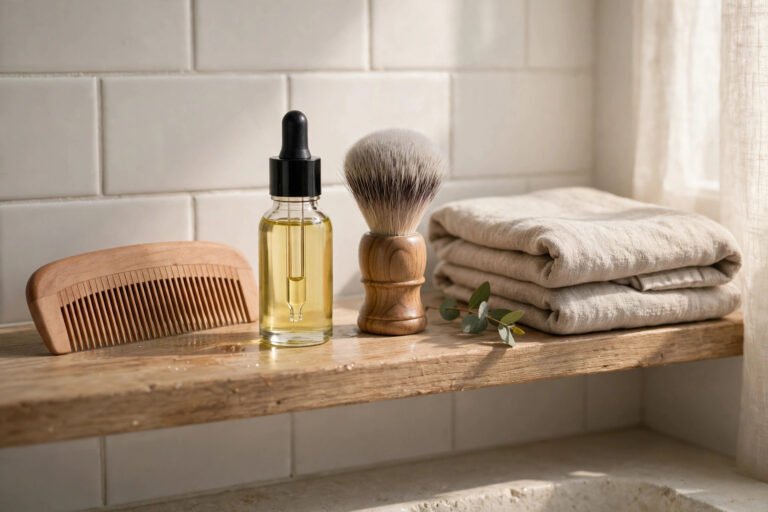
Tell your barber clearly that you want to keep your curls, not straighten them. Bring reference photos of men with similar curl types, not just celebrities with straight hair. Ask the barber to cut less than you think you need at first, because curly hair springs up when dry and looks shorter than when wet. A cut that looks perfect on wet hair may look too short once dry. Visit the barber every four to six weeks for shape maintenance, or every two to three weeks if you have a fade. Between visits, trim only split ends if you are confident; otherwise leave cutting to the barber. Avoid daily straightening with high heat, which damages curls permanently over time and makes natural texture harder to recover. Beard pairing also matters. A short, well-shaped beard balances a curly crop nicely, while a longer beard pairs better with medium or long curls. Keep the neckline and cheek lines clean, and use beard oil sparingly to avoid a greasy look in summer.
Styling Products: Keep It Simple
You do not need ten products. For most Pakistani men with curly hair, three are enough: a gentle shampoo, a good conditioner, and one styling product such as leave-in conditioner, curl cream or light pomade. Avoid heavy gels that make curls stiff and crunchy, especially in humidity, where they can flake. Apply styling product to damp hair, not soaking wet or fully dry hair, and use less than you think. You can always add a little more, but too much product makes curls heavy and greasy. In winter, when air is drier, a slightly richer cream helps; in summer, a lighter product prevents buildup and sweat-related itching.
FAQ
Should Pakistani men with curly hair straighten it daily? No, daily straightening damages curls, causes dryness and breakage, and takes a lot of time. Working with your natural curls through a good cut and simple care usually looks better and stays healthier. How often should I wash curly hair? Two to three times a week is enough for most men. Wash more often only if you sweat heavily, work in dust, or use heavy styling products daily. Always condition after washing. Why does my curly hair look frizzy in Pakistani summers? Humidity, heat, towel-rubbing, dry brushing and lack of conditioner all increase frizz. Use leave-in conditioner, dry gently, avoid fine combs, and refresh curls with water and a little cream instead of rewashing. What should I tell my barber for curly hair? Say you want to keep your curls, show a photo of your natural curl pattern, ask for a cut that follows the curls, and ask the barber to cut conservatively, because curls spring up when dry.
Conclusion
The best hairstyle for a Pakistani man with curly hair is one that respects his natural texture, suits his face shape and fits his daily routine. Start with a good barber, choose a practical style like a curly crop or medium fringe, and follow simple care: wash less often, condition always, dry gently, and style with light products. Stop fighting your curls, and they will become one of your best features rather than a daily frustration.