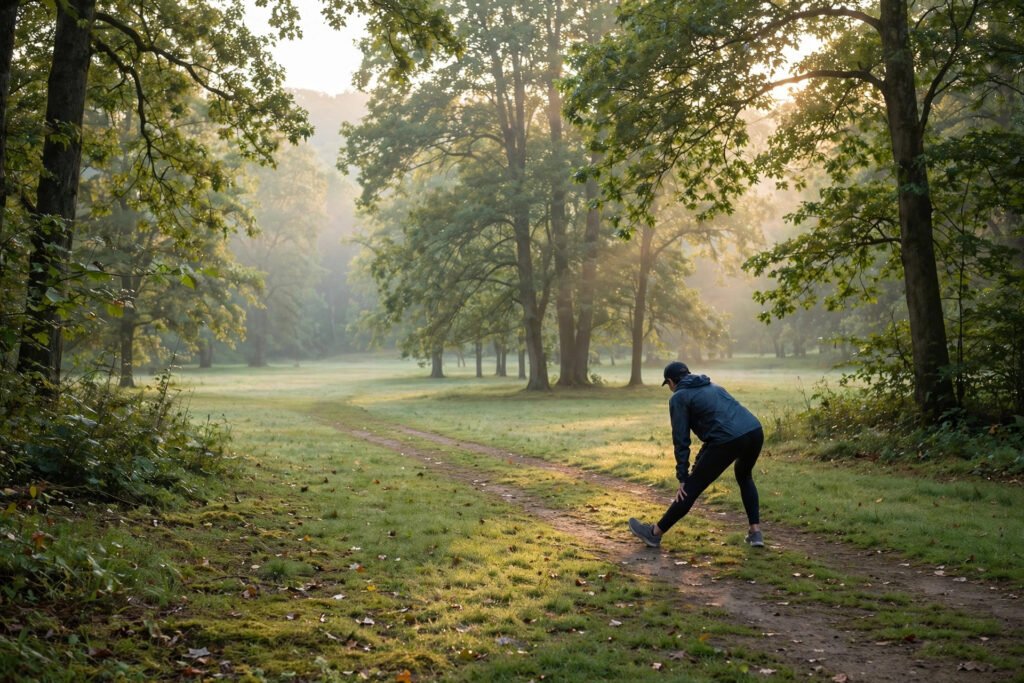
Many beginners in Pakistan start exercising by jumping straight into a workout, then wonder why their muscles feel stiff, sore or strained the next day. Stretching is often the missing step. Done correctly, it prepares your body for movement and helps it recover afterwards. Done badly, it can cause injury. This guide explains the difference between warming up and cooling down, and gives a simple routine you can follow at home.
Stretching Before Exercise: Warm Up, Don’t Stretch Cold
The biggest mistake beginners make is stretching cold muscles. Before exercise, your goal is to warm the body up, not to force it into deep stretches. Start with five minutes of gentle movement: marching in place, slow walking around the room, arm circles and easy leg swings. This raises your temperature, loosens your joints and prepares your heart for activity. After this gentle warm-up, add dynamic stretches: movements that take your joints through their range while you keep moving. Examples include walking lunges, gentle side steps, shoulder rolls and slow torso twists. Keep every movement controlled and pain-free. You should feel warmth and looseness, not sharp pulling. In winter in Pakistan, warm up for longer, because cold mornings in Lahore, Islamabad or Murree make muscles tighter.
Stretching After Exercise: Slow Down Gently
After exercise, your muscles are warm, and this is the right time for static stretching: holding a gentle stretch for 20 to 30 seconds while breathing normally. Focus on the muscles you used most. After walking or running, stretch your calves, thighs and hips. After a home workout, add chest, shoulder and back stretches. Hold each stretch at a point of mild tension, never pain. Breathe slowly and relax into it. Do not bounce, because bouncing can strain a muscle. A five to ten minute cool-down, including slow walking and gentle stretches, helps your heart rate fall gradually and reduces next-day stiffness. Finish with water and a few minutes of rest before sitting for a long time.
A Simple 10-Minute Stretching Routine
Before exercise, try this warm-up: one minute of marching in place, one minute of arm circles, one minute of gentle leg swings holding a chair, one minute of slow squats, and one minute of walking lunges. That is five minutes, and it is enough for most beginner workouts. After exercise, try this cool-down: calf stretch against a wall, standing thigh stretch holding a chair, seated hamstring stretch, gentle chest opening stretch, shoulder stretch across the body, and a slow neck stretch to each side. Hold each for 20 to 30 seconds per side. The whole cool-down takes about five minutes. Do it in a comfortable room, on a mat or a thick chadar if the floor is hard.
Stretching Tips for Pakistani Homes and Weather
You do not need a gym or special clothes to stretch. A shalwar kameez works for gentle stretching, though trousers and a t-shirt give more freedom. In summer, stretch indoors with a fan on, and drink water before and after. In winter, wear a warm layer during your cool-down so your muscles do not chill quickly. During smoggy days, stretch indoors rather than exercising hard outside. Women who prefer privacy can stretch easily at home in any room. Older adults should stretch even more gently, using a chair or wall for balance, and should never force a joint past its comfortable range. If you have diabetes, heart disease, joint problems or an old injury, check with your doctor before starting a new exercise routine. This article is general information, not medical advice.
Common Stretching Mistakes to Avoid
First, never stretch through sharp pain. Mild tension is normal; sharp, sudden or joint pain is a signal to stop. Second, do not hold your breath during stretches: breathe normally and relax. Third, do not copy advanced yoga poses from social media on day one. Flexibility improves slowly over weeks, and forcing it causes strains. Fourth, do not skip the warm-up because you are short on time: a shorter workout with a proper warm-up is safer than a longer workout started cold. Finally, do not expect stretching alone to prevent all soreness. Mild muscle soreness after a new workout is normal and fades in a day or two. Stretching, rest, sleep and water help recovery, but persistent pain, swelling or weakness should be checked by a doctor.
How Often Should You Stretch?
Stretch after every workout, even a short one. On rest days, a gentle five-minute stretch in the morning can ease stiffness, especially if you sit for long hours studying or working. You do not need to stretch for an hour to benefit: consistency matters more than duration. Aim for a short daily habit, and increase gradually as your body becomes more flexible. Track your progress simply. Note which stretches feel easier each week, rather than chasing extreme flexibility. The goal is comfortable, pain-free movement for daily life: climbing stairs, playing with children, working in the fields or office, and walking without stiffness.
Frequently Asked Questions
Should I stretch before or after exercise?
Both, but differently. Before exercise, warm up with gentle movement and dynamic stretches. After exercise, do slow static stretches while your muscles are warm. Never do deep static stretches on cold muscles.
How long should I hold a stretch?
Hold static stretches for 20 to 30 seconds, breathing normally. For a general cool-down, one round of each major stretch is enough for beginners.
Is stretching enough as a workout?
No. Stretching supports exercise, but it does not replace walking, strength work or cardio. Combine short stretching with regular walking or a home workout routine for real fitness benefits.
What if stretching hurts?
Stop immediately. Stretching should feel like mild tension, not pain. If pain persists, rests does not help, or a joint swells, seek medical advice before continuing.
Conclusion
Proper stretching is simple: warm up before you exercise, stretch gently afterwards, breathe normally, and never force a painful position. Five minutes before and five minutes after your workout can reduce stiffness, lower injury risk and make exercise feel better. Start with the routine in this guide, stay consistent, and your body will thank you with easier movement every day.