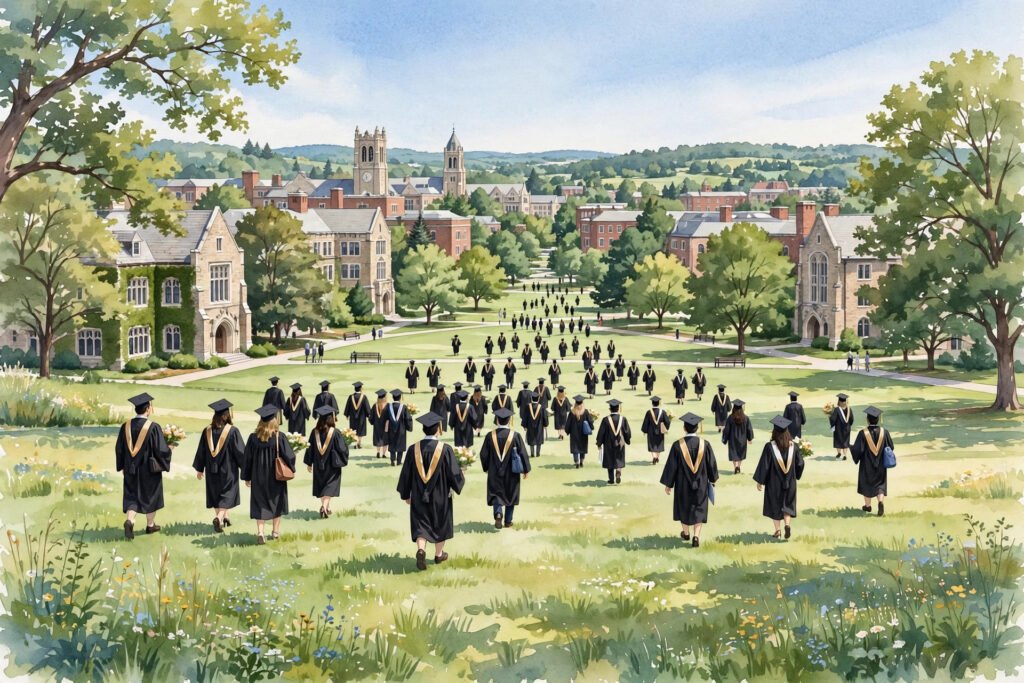
A Bachelor of Business Administration, or BBA, is one of the most versatile degrees in Pakistan. It opens doors in banking, marketing, human resources, finance, sales and entrepreneurship, yet many graduates still ask the same question after their final exams: what now? The answer depends on your interests, your skills and the practical experience you build alongside your degree. This guide explains the main career options after BBA in Pakistan, honestly, with their strengths, demands and realistic next steps.
What a BBA Actually Prepares You For
A BBA teaches the language of business: management, marketing, finance, accounting, economics, organisational behaviour and business communication. That broad base is its strength and its challenge. Unlike a specialised degree that points to one profession, a BBA points to many, which means graduates must choose a direction and build depth in it through internships, short courses and early job experience. Employers in Pakistan value BBA graduates for communication skills, presentation ability, basic financial understanding and teamwork. But they also expect practical skills that a degree alone does not guarantee: Excel and data handling, clear written English and Urdu, customer handling, and familiarity with digital tools. Graduates who build these skills during their degree stand out quickly, while those who rely only on the degree certificate often struggle in a competitive job market.
Jobs in Banking and Finance
Banking remains one of the most popular routes for BBA graduates in Pakistan. Banks hire for branch banking, customer service, operations, credit analysis, trade finance and relationship management. Entry usually starts with a management trainee programme or an officer-level role, often after a written test and interview. State Bank and commercial banks regularly announce trainee programmes, so watch their careers pages and newspapers rather than waiting for a single opportunity. Finance roles outside banks include financial analysis, accounting support, auditing assistance and fintech companies, which are growing in Pakistan through mobile wallets, digital payments and online banking. These roles reward strong Excel skills, attention to detail and basic accounting knowledge. Short courses in accounting software, financial modelling or data analysis can strengthen a BBA graduate’s application considerably, especially for candidates without a specialised finance degree. Banking and finance suit graduates who enjoy numbers, structured work and clear career ladders, with promotions tied to exams and performance. The work can be routine at entry level, and hours can be long in branches, but the sector offers stability, training and a recognised career path that many families value.
Marketing, Sales and Digital Marketing
Marketing is a natural fit for BBA graduates who enjoy creativity, communication and people. Traditional marketing roles include brand management assistance, market research, advertising coordination and sales management. Sales roles, in fast-moving consumer goods, pharmaceuticals, telecom and banking, are widely available and often offer faster growth for graduates who are confident communicators and comfortable with targets. Digital marketing has become a major route in its own right. Pakistani businesses, from small online stores to large brands, need people who can manage social media, run paid advertising, write content, handle search engine optimisation and analyse campaign results. A BBA graduate with a short digital marketing course, a portfolio of real projects, and familiarity with tools such as Meta Ads, Google Ads and analytics can compete strongly, even without prior agency experience. Marketing suits graduates who enjoy variety, ideas and measurable results. It also rewards freelancing: many digital marketers start with small clients, build a portfolio, and later move into agency work or full-time roles. The field changes fast, so continuous learning matters more than any single course.
Human Resources and Management Roles
Human resources, or HR, suits BBA graduates who enjoy working with people, solving workplace problems and organising systems. HR roles include recruitment, training coordination, payroll support, employee relations and HR operations. Large companies, banks, telecom firms and multinationals in Pakistan hire HR trainees regularly, and the field offers a clear progression from assistant to officer to manager. General management roles, including management trainee programmes in large companies, rotate graduates through departments such as operations, sales, marketing and HR. These programmes are competitive, but they give a broad view of business and fast-track promotion for strong performers. They suit graduates who are flexible, willing to learn different functions, and comfortable moving cities if required. Operations and supply chain management is another growing area, covering procurement, logistics, inventory and distribution. With Pakistan’s e-commerce and retail growth, companies need graduates who can manage stock, coordinate deliveries and improve processes. Short courses in supply chain or logistics, plus internship experience, help BBA graduates enter this field.
Further Studies: MBA, MS and Professional Courses
Further study is a strong option, but it should be a deliberate choice, not a default delay. An MBA after BBA can deepen management knowledge and improve promotion prospects, especially from a reputable university with strong industry links. However, an MBA immediately after BBA, without work experience, may add less value than the same degree after two or three years of work, when you can connect theory to real problems. Many employers value an MBA plus experience far more than an MBA alone. An MS in a specialised area, such as finance, marketing, human resource management or supply chain, suits graduates who know which field they want to specialise in. Professional qualifications, such as ACCA, CA foundation papers, CFA level one, or certifications in digital marketing, project management or data analysis, can also strengthen a CV, but choose one that matches your target career rather than collecting certificates at random. Before committing to further study, check the cost, duration, university reputation and employment outcomes honestly. Talk to graduates of the programme, check whether employers in your target field actually value that qualification, and consider whether a year of work experience plus a short professional course might serve you better.
Freelancing, Business and Entrepreneurship
Not every BBA graduate needs a traditional job. Freelancing suits graduates with a marketable skill: social media management, content writing, graphic design basics, virtual assistance, bookkeeping, or business plan writing. Platforms such as Fiverr and Upwork offer access to international clients, but success requires a strong profile, a portfolio of real work, patience through early low-paid projects, and excellent client communication. Freelancing income is irregular at first, so many graduates combine it with a part-time job or family support while building clients. Starting your own business is another route, and a BBA provides useful grounding in planning, marketing and finance. Small businesses in Pakistan, from online stores to services, food, tutoring and consultancy, can grow steadily with careful planning. But entrepreneurship also carries risk, and a realistic business plan, starting capital, and a clear understanding of costs, taxes and regulations matter more than enthusiasm alone. Consider starting small, testing an idea part-time, and learning from early customers before investing heavily. Government jobs and competitive exams, including CSS and provincial public service commissions, are also options for BBA graduates. These routes require dedicated preparation in general knowledge, English essay writing and subject papers, and competition is intense. They suit graduates who enjoy public service, structured careers and long-term stability, and who are willing to invest a year or more in preparation.
Building Experience While You Study or Job Hunt
Experience matters more than most students realise, and it can be built before graduation. Apply for internships in banks, companies, startups and NGOs, even unpaid short internships, because real workplace experience and a reference letter outweigh a long list of courses. Volunteer for university societies, organise events, and take responsibility for budgets or teams, because these experiences demonstrate management skills in interviews. Build a simple portfolio: a CV that highlights projects, internships and skills, a LinkedIn profile with a clear headline, and, for marketing or freelancing routes, samples of real work. Practise interview skills, including common questions about your degree, your strengths and why you want a particular role. Many capable graduates lose opportunities not because they lack knowledge, but because they cannot explain their value clearly in an interview.
Frequently Asked Questions
Is BBA enough to get a good job in Pakistan?
A BBA opens doors, but employers increasingly value practical skills, internships and communication alongside the degree. Graduates who combine BBA with Excel, digital tools, internships and a clear career direction compete far more strongly than those relying on the degree alone.
Should I do an MBA immediately after BBA?
Not necessarily. An MBA after two or three years of work experience often adds more value, because you can connect study to real workplace problems. If you do pursue an MBA immediately, choose a reputable programme and gain internships during it.
Which field pays best after BBA?
Pay varies by company, city, role and performance, not by field alone. Banking, finance, sales and digital marketing can all pay well with experience, but early salaries are modest in most fields. Focus on building skills and a track record, because pay follows performance over time.
Can BBA graduates work abroad?
Yes, but international roles usually require additional qualifications, language skills, work experience or employer sponsorship, depending on the destination. Freelancing for international clients is often a more accessible first step to global work than relocating immediately.
Conclusion
The best career after BBA in Pakistan is not a single job title. It is a direction that fits your interests, built through internships, short courses, practical skills and early work experience. Explore banking and finance if you enjoy numbers, marketing and sales if you enjoy people and ideas, HR and management if you enjoy organisation, and freelancing or business if you value independence. Choose further study deliberately, build a portfolio, and practise explaining your value clearly. A BBA gives you the language of business; your skills, experience and choices will decide where that language takes you.