Losing weight does not mean giving up desi food, skipping meals, eating only salads, or following a diet that has nothing to do with how Pakistani families actually cook and eat. The best weight loss plan is one you can follow in real life — with roti, daal, sabzi, dahi, eggs and chicken — in sensible portions, with less oil and sugar, and with daily movement. This 7-day plan is a practical, home-based start, using everyday foods in a normal Pakistani kitchen. It makes no miracle claims: healthy weight loss is gradual, and works best with better food choices, walking, sleep and consistency. Consult a doctor before starting any diet, especially if you have diabetes, thyroid problems, high blood pressure, or if you are pregnant or breastfeeding. This plan is general information, not medical advice.
How This Plan Works
The plan rests on four principles: portion control — eat a little less, especially of roti, rice and fried foods; more vegetables and protein at each main meal; less sugar, ghee and fried food; and a brisk walk every day. Drink water, eat slowly, and avoid eating late at night.
Portion Guidance: The Simple Plate
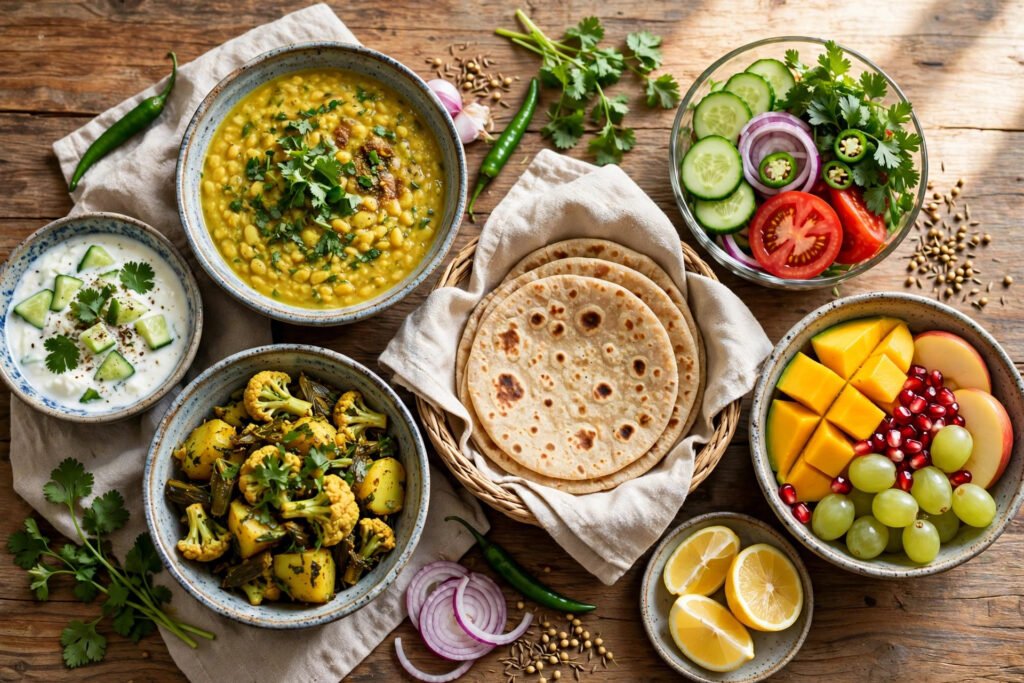
Use this simple plate for lunch and dinner: half with sabzi, salad or steamed vegetables; one quarter with protein — daal, chicken, fish, eggs or dahi; and one quarter with roti or rice. One medium roti at lunch and one at dinner is a good start, with more sabzi and daal to fill up. Eat until satisfied, not full, and eat slowly.
The 7-Day Desi Meal Plan
This is a sample plan. You can swap similar foods — one daal for another, or one seasonal sabzi for another — as long as you keep the portions and balance similar.
Day 1: Breakfast — one boiled egg, one small whole wheat roti, plain dahi, and green tea or doodh patti without sugar. Lunch — one medium roti, moong daal, mixed sabzi, and salad. Snack — a seasonal fruit such as an apple or guava. Dinner — grilled or tawa chicken, lauki or tori sabzi, and dahi, with a small roti if hungry.
Day 2: Breakfast — oats in low-fat milk, or a vegetable omelette with one small roti. Lunch — one medium roti, chana daal, palak sabzi, and salad. Snack — roasted chana and green tea. Dinner — fish curry with a little rice, or grilled fish with sabzi and salad.
Day 3: Breakfast — two boiled eggs, dahi, and one small roti. Lunch — one medium roti, masoor daal, bhindi sabzi, and salad. Snack — fruit and low-fat lassi without sugar. Dinner — chicken salan, gajar matar sabzi, and salad.
Day 4: Breakfast — vegetable omelette, one small roti, and green tea. Lunch — one medium roti, arhar daal, baingan sabzi, and raita. Snack — a handful of mixed nuts. Dinner — daal and sabzi with a small roti and salad.
Day 5: Breakfast — one boiled egg, dahi, and a small roti. Lunch — a small bowl of rice with chicken curry and salad. Snack — seasonal fruit and green tea. Dinner — moong daal with palak, one small roti, and cucumber raita.
Day 6: Breakfast — oats with low-fat milk and fruit, or an egg with a small roti. Lunch — one medium roti, lobia or rajma, mixed sabzi, and salad. Snack — roasted chana. Dinner — grilled chicken or fish, sabzi, and dahi.
Day 7: Breakfast — vegetable omelette, one small roti, and green tea. Lunch — one medium roti, mixed daal, seasonal sabzi, and salad. Snack — seasonal fruit. Dinner — vegetable soup or daal with a small roti and salad. Repeat in week two, swapping daals, sabzis and fruits.
Foods to Eat More Often, and Foods to Limit
Eat more sabzi, daal, eggs, chicken, fish, dahi, beans, salad and seasonal fruit, with roti and oats in controlled portions. Cook with less oil, and try steaming, grilling or tawa cooking instead of deep frying. Limit sugary drinks, fried snacks such as samosa and pakora, excess ghee, mithai, white bread and biscuits, and large portions of rice and roti. Drink water instead of sugary drinks, and eat fruit instead of biscuits.
Hydration, Walking and Sleep
Drink water through the day; sometimes what feels like hunger is thirst, so try a glass of water first. Aim for a brisk 30-minute walk every day — in your street, a park, or at home — starting with 15 minutes. Take the stairs when you can. Aim for 7 to 8 hours of sleep, eat dinner a few hours before bed, and keep a regular routine, as tiredness makes cravings more likely.
Common Mistakes to Avoid
Do not skip breakfast, eat too little, or rely on a single food — no single food burns fat on its own. Weigh yourself once a week, not daily, and do not give up after one bad day. If you have diabetes, thyroid disease, high blood pressure or PCOS, or you are pregnant or breastfeeding, consult a doctor first. If you feel dizzy or unwell, stop and seek medical advice.
Conclusion
A weight loss diet plan for Pakistani women does not need to be complicated or expensive. It can be built from the foods you already cook at home: roti in a sensible portion, daal, sabzi, dahi, eggs, chicken and fish, with seasonal fruit and plenty of water. Follow the 7-day plan, keep portions moderate, limit sugary drinks and fried food, walk 30 minutes a day, and be patient. Start today, not next Monday — make one small change, a smaller roti, water instead of a soft drink, or a 15-minute walk.
Frequently Asked Questions
Can Pakistani women lose weight while eating roti and rice?
Yes. Keep the portion modest, fill half your plate with sabzi and salad, and include protein like daal, eggs or chicken. Portion control beats cutting out one food.
How much weight can I lose in a month with this plan?
Healthy weight loss is gradual and varies from person to person, depending on your starting weight, activity level and health. Do not aim for rapid weight loss — consult a doctor if you have a health condition or are unsure what is safe.
Is walking enough exercise for weight loss?
Walking is a great start, especially a brisk 30-minute walk every day. Combined with portion control and fewer sugary and fried foods, it helps many women lose weight steadily. You can add other activity later.
Should I consult a doctor before starting this diet plan?
Yes, especially if you have diabetes, thyroid problems, high blood pressure, or if you are pregnant or breastfeeding. This plan is general information, not medical advice — a doctor can advise what is safe for you.