Introduction
Intermittent fasting has become one of the most talked-about weight loss methods in Pakistan, from gym groups to family WhatsApp chats. Unlike a traditional diet, it does not tell you exactly what to eat. Instead, it sets windows for when you eat and when you fast. That simplicity appeals to many people, but it also causes confusion, especially around desi food, chai timings, family meals and Ramazan. This beginner’s guide explains intermittent fasting in a Pakistani context, how to start safely, what to eat in your eating window, and when to stop and seek medical advice. This article is general information only, not medical advice for any individual condition.
What Is Intermittent Fasting?
Intermittent fasting is an eating pattern that cycles between periods of eating and fasting. During the fasting window, you consume no calories, though water, black tea and black coffee without sugar are usually allowed. During the eating window, you eat your normal meals. The most popular method is 16:8, which means fasting for 16 hours and eating within an 8-hour window each day. For example, you might eat between 12 noon and 8 pm, and fast from 8 pm to 12 noon the next day. Other methods include 14:10, which is gentler for beginners, and 5:2, where you eat normally five days a week and eat much less on two days. Beginners should start gently and never jump to extreme fasting. Fasting works for weight loss mainly because it helps many people eat fewer total calories without counting every bite. It is not magic, and it does not cancel out overeating during the eating window. If you eat large amounts of fried food, sugary drinks and desserts in eight hours, you may not lose weight at all.
How to Start Safely in Pakistan
Start with 14:10 for one or two weeks before trying 16:8. A 14-hour fast might mean finishing dinner by 8 pm and eating breakfast at 10 am. This is manageable for most healthy adults and lets your body adjust without severe hunger or headaches. Plan your eating window around your life, not the other way round. If family dinner is at 9 pm, an eating window ending at 8 pm will fail quickly. Choose a window that includes your main family meal, whether that is lunch or dinner, so fasting does not isolate you from family life. Consistency matters more than a perfect window. Do not start intermittent fasting if you are pregnant, breastfeeding, under 18, underweight, or living with diabetes, low blood pressure, an eating disorder or another serious medical condition, without first speaking to a doctor. If you feel dizzy, faint, excessively tired or unwell while fasting, stop and eat, and seek medical advice if symptoms persist.
What to Eat in Your Eating Window
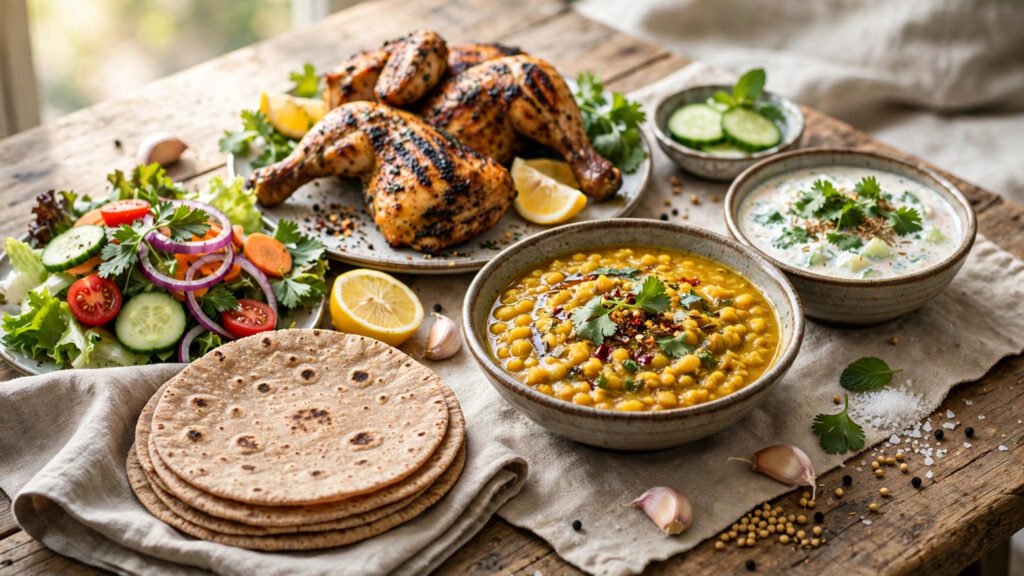
Fasting does not mean you can ignore food quality. For weight loss, your eating window should still be built around balanced, filling Pakistani foods. Start with protein at each meal: eggs, daal, chicken, fish, yoghurt or paneer. Protein keeps you full longer and protects muscle while you lose fat. Add vegetables generously, especially salads, sabzi and soups, and choose whole grains such as whole wheat roti, brown rice or oats over refined options where possible. Keep portions sensible. A plate that is half vegetables, a quarter protein and a quarter grains is a useful visual guide for most meals. Desi food can fit fasting well. A typical eating window might include a late breakfast of eggs, whole wheat bread and fruit, a lunch of daal, sabzi, salad and one or two rotis, and a dinner of grilled chicken or fish with vegetables. Keep fried items, parathas cooked in lots of ghee, sugary drinks and mithai as occasional treats, not daily staples.
Drinks, Chai and Common Desi Challenges
Water is your best friend during fasting. Drink water regularly through the day, especially in Pakistani summers, when dehydration causes headaches and fatigue that people mistake for hunger. Sparkling water, black tea and black coffee without sugar or milk are generally considered acceptable during a fast, but check the rules of the method you follow. Doodh patti and sweet chai break a fast, because milk and sugar contain calories. If you love morning chai, schedule your eating window to include it, rather than trying to give it up and failing within days. Similarly, plan for dawat, weddings and family gatherings. One special meal does not ruin your progress; simply return to your normal window the next day without guilt or extreme compensating fasts. Ramazan is different from intermittent fasting, because it has religious rules, timings and spiritual meaning. Do not confuse the two, and do not use intermittent fasting advice to change Ramazan observance. If you fast in Ramazan and also want to manage weight, focus on balanced sehri and iftar meals and gentle activity, and seek guidance from a doctor or dietitian if you have health concerns.
Exercise While Fasting
Light to moderate exercise fits well with intermittent fasting for most healthy adults. Walking, light home workouts and stretching can be done during the fasting window, but listen to your body. If you feel weak or dizzy, stop and eat. Heavy gym training, intense cardio or sports practice are usually better done during or shortly after your eating window, when you have energy from food. Avoid starting a tough new exercise programme and a new fasting routine on the same day. Change one habit at a time, so you can tell what is actually working. Sleep also matters for weight loss. Poor sleep increases hunger hormones and cravings, making fasting much harder. Aim for regular sleep hours, and avoid late-night screen time and heavy meals close to bedtime where possible.
Common Mistakes to Avoid
The biggest mistake is overeating in the eating window to compensate for fasting. Fasting is not a licence for unlimited food. Eat until satisfied, not stuffed, and stop when you feel comfortably full. Another mistake is skipping protein and vegetables and filling the window with biscuits, juices and fried snacks. These foods leave you hungry again quickly and make the next fast much harder. A filling, balanced meal is the best preparation for a comfortable fast. Many beginners also fast too aggressively, jumping to 20-hour fasts or skipping meals for days. Extreme fasting can cause fatigue, muscle loss, hormonal problems and binge eating later. Slow, steady progress beats dramatic fasting that you abandon within a week. Finally, do not judge success by the scale alone. Weight fluctuates with water, food and clothing. Track weekly trends, how your clothes fit, your energy and your sleep, not a single day’s number.
Frequently Asked Questions
Is intermittent fasting safe for everyone?
No. It is not suitable for children, pregnant or breastfeeding women, underweight people, or people with diabetes, eating disorders or certain medical conditions, unless a doctor advises otherwise. Healthy adults should still start gently and stop if they feel unwell.
What can I drink during the fasting window?
Water is best. Black tea and black coffee without sugar or milk are usually allowed. Milk, sugar, juices and soft drinks break the fast because they contain calories.
Will I lose muscle with intermittent fasting?
You can protect muscle by eating enough protein in your eating window and doing regular light strength or bodyweight exercise. Extreme fasting and very low protein intake increase muscle loss risk.
How long before I see weight loss results?
Most people who combine fasting with balanced meals notice gradual changes over several weeks, not days. Aim for slow, steady loss rather than rapid drops, which are harder to maintain.
Conclusion
Intermittent fasting in Pakistan can work for weight loss when done sensibly: start with a gentle window, keep your main family meal inside it, eat balanced desi meals with protein and vegetables, drink enough water, and avoid extreme fasting. It is a tool for controlling when and how much you eat, not a miracle cure, and it works best alongside walking, good sleep and realistic portions. If you have any medical condition or feel unwell, speak to a doctor before continuing. Done patiently, fasting can become a sustainable habit, not another short-lived diet.