Good shoes do more than complete an outfit. They affect how you walk, how long you can stay on your feet, and how confident you feel at work, at a wedding, or on a casual day out. In Pakistan, men have a wide choice, from polished formal shoes and easy sneakers to the classic Peshawari chappal. Each type suits different occasions, and knowing what to look for saves money and sore feet. This guide covers the main categories and the practical details that matter before you buy.
Formal Shoes for Office and Events
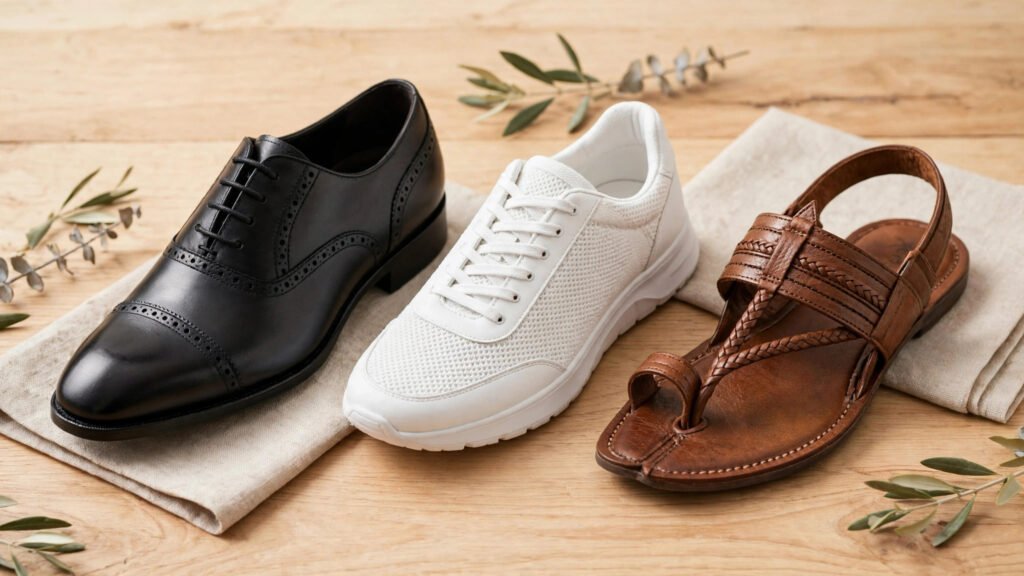
Formal shoes are a must for office work, business meetings, weddings, and formal dinners. The most popular styles are Oxfords, Derbies, and loafers. Oxfords, with their closed lacing, look the sharpest and suit suits and formal shalwar kameez alike. Derbies have open lacing and are slightly more forgiving on wider feet. Loafers slip on easily and work well for semi-formal occasions.
Leather is the classic formal material. Genuine leather moulds to your feet over time, breathes better than synthetic materials, and lasts for years with basic care. When shopping, check the stitching, the sole attachment, and the inner lining. Even stitching and a firm sole are signs of decent craftsmanship. Black suits most formal occasions, while dark brown is more versatile for mixing with navy, grey, and beige outfits.
Comfort matters as much as looks. A formal shoe should feel comfortable from the first wearing, not only after a painful breaking-in period. Look for cushioned insoles and a sole that grips well on smooth floors. If you spend long hours standing, a slightly thicker cushioned sole is worth choosing over the thinnest, dressiest option.
Casual Shoes for Everyday Wear
Casual shoes cover the largest part of most men’s daily lives: university, shopping, travelling, and meeting friends. Sneakers are the most popular choice, offering comfort, light weight, and endless colour options. Canvas shoes are a good summer choice because they breathe well in hot weather. Casual loafers and moccasins bridge the gap between sneakers and formal shoes, giving a smart look without laces.
When buying casual shoes, prioritise fit and comfort over brand names. Your toes should have room to move, and the heel should not slip when you walk. Try shoes on later in the day if possible, since feet swell slightly with heat and activity, especially in Pakistani summers. Walk around the shop for a few minutes rather than judging from a single step.
Sole quality matters for daily use. A flexible, well-gripped sole handles city streets, bazaars, and uneven pavements better than a hard, slippery one. Removable insoles are a bonus, since they can be replaced or washed. For rainy monsoon days, avoid light-coloured canvas and choose something easier to clean.
Peshawari Chappal: A Pakistani Classic
The Peshawari chappal is one of Pakistan’s most loved footwear styles, worn across the country for Eid, weddings, and everyday comfort. Traditionally handcrafted, it combines an open design with a sturdy sole, making it ideal for warm weather. The classic style uses leather straps, while modern versions come in many colours and finishes.
Quality varies widely, so buy from a trusted maker or shop. Check the leather carefully: it should feel supple, not stiff or plasticky. The stitching around the straps should be neat and strong, since this is where most wear happens. The sole should be thick enough for comfort but not so heavy that walking feels tiring. A well-made chappal lasts for years, while a cheap one can fall apart within a season.
Fit is different from closed shoes. Your foot should sit comfortably within the sole without hanging over the edges, and the straps should hold the foot securely without pinching. Try both feet, and walk around to check that the chappal does not slip off at the heel. For formal occasions, darker leather with clean finishing looks smartest with shalwar kameez.
How to Choose the Right Pair
Start with the occasion. One good formal pair, one comfortable casual pair, and one quality chappal cover most needs for most men in Pakistan. Buying fewer, better pairs usually works out cheaper than buying many low-quality ones that wear out quickly.
Material is the next decision. Genuine leather costs more but lasts longer and ages well. Good synthetic materials can be fine for casual shoes, but check the finish and flexibility before buying. Avoid shoes with a strong chemical smell, which often signals poor-quality material.
Size deserves attention. Sizes vary between brands, so always try before you buy, and check the fit on both feet. If you shop online, read the size guide carefully and check the return policy before ordering. Socks matter too: try formal shoes with the socks you will actually wear with them.
Finally, think about care. Leather shoes benefit from occasional polishing and should be kept away from direct water. Chappals should be stored in a dry place, and sneakers can be cleaned gently with a soft brush. A little care doubles the life of any pair.
Frequently Asked Questions
Which shoes are best for daily use in Pakistan?
Comfortable sneakers or casual loafers suit most daily routines, while a Peshawari chappal is excellent in warm weather. Choose a pair with a grippy, flexible sole for city streets.
Are leather shoes worth the higher price?
For formal shoes, yes. Genuine leather lasts longer, breathes better, and looks better with age than most synthetic alternatives, making it good value over time.
How should a Peshawari chappal fit?
Your foot should rest fully on the sole without hanging over the edges, and the straps should hold firmly without pinching. Always try both feet and walk around before buying.
How many pairs of shoes does a man really need?
Three pairs cover most needs: one formal pair, one casual pair, and one chappal. Add more only when a specific occasion or activity demands it.
Conclusion
The best shoes for men in Pakistan are not necessarily the most expensive ones; they are the ones that fit well, suit the occasion, and are made to last. A polished formal pair for work and weddings, a comfortable casual pair for everyday life, and a well-crafted Peshawari chappal for warm days and traditional occasions make a solid collection. Check the material, stitching, sole, and fit before buying, and look after your shoes once you own them. With those habits, every step will feel better, and your shoes will serve you well for a long time.