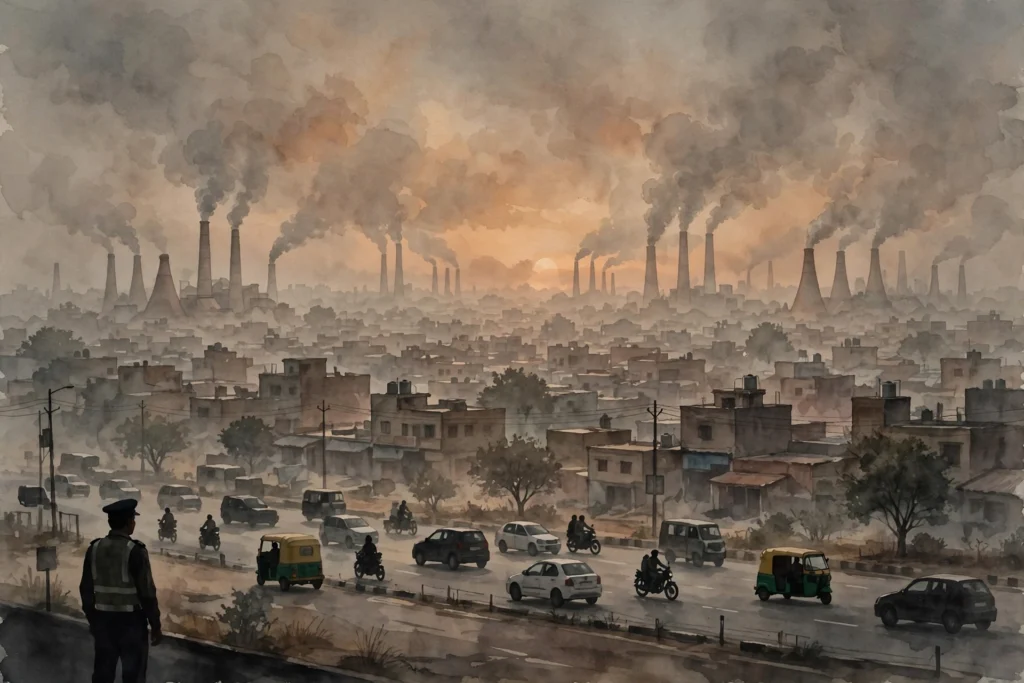
Jhang’s air remained firmly in the unhealthy range this week, with the Punjab government’s own monitoring dashboard putting the district at an Air Quality Index (AQI) of 203 on Thursday, 29 October. The figure places Jhang among the worst-affected districts in the province, behind only Kasur (348), Lahore (324), Faisalabad (290), Kot Addu (269), Dera Ghazi Khan (267), Nankana Sahib (261), Hafizabad (250), Sahiwal (210) and Sheikhupura (205), and just ahead of Rajanpur (201).
The reading comes from a provincial picture that has turned grim as the peak smog season approaches. Lahore was ranked the world’s most polluted major city once again on Thursday morning, recording an AQI of 419 on IQAir’s live ranking between 10am and 11am, ahead of Cairo at 274 and Delhi at 220. The two monitoring platforms do not always agree — they measure at different places and times — but both point in the same direction: the air across Punjab is deteriorating fast.
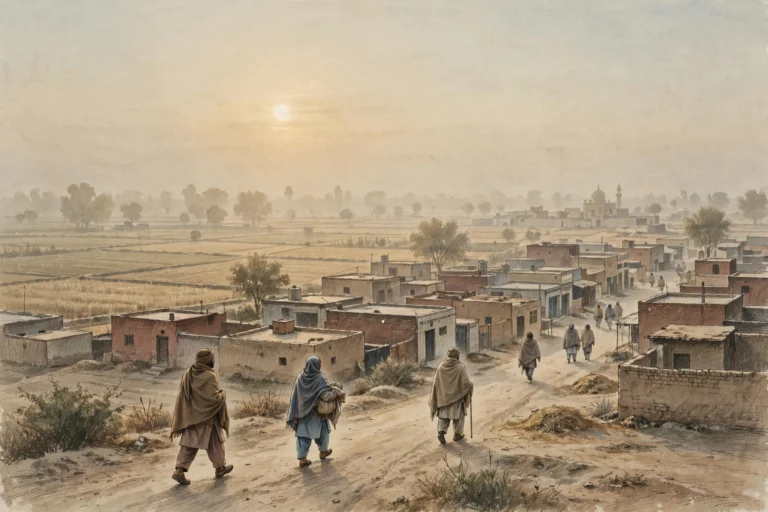
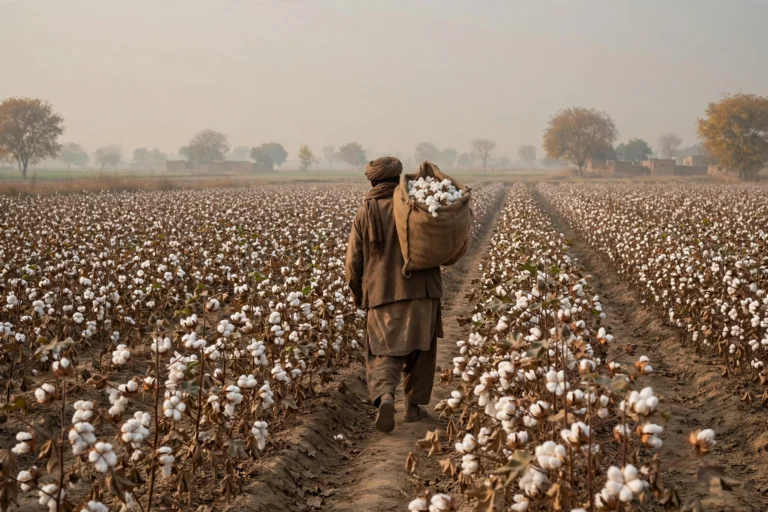
For Jhang, the number matters because the district sits at the intersection of almost every source the authorities are now chasing. It is a large agricultural district, where crop-residue burning is a seasonal problem; it has brick kilns dotted around its towns and villages; and its roads carry a heavy mix of smoke-emitting vehicles, tractor-trolleys and construction traffic. None of that is new. What is new is the scale of the enforcement now being reported.
The Punjab Environment Protection Agency (EPA) has released the results of a month-long pre-smog enforcement campaign running from 28 September to 27 October. In that period, its teams carried out 11,580 inspections of brick kilns, demolished 197 non-compliant kilns, sealed 163 units, issued 314 smog notices, registered 162 first information reports (FIRs) and imposed fines totalling Rs40.7 million. EPA Director General Abdullah Nayyar Sheikh described the approach as data-driven and zero-tolerance, aimed at protecting public health before the smog season peaks.
The campaign went well beyond kilns. Inspectors visited 6,650 industrial sites, demolished 22 non-compliant units, sealed 191 premises, issued 333 notices and registered 15 FIRs, collecting Rs28 million in fines. Action against plastic burning covered 6,064 inspections, 678 notices, 152 sealed premises and 45,100 kilogrammes of confiscated plastic, with fines of around Rs2 million. A separate drive on suction hoods at commercial and industrial facilities inspected 4,204 sites, found 1,863 units had installed the equipment, and sealed 333 non-compliant sites. Construction dust was tackled in 397 union councils, where 181 notices were issued, 20 locations sealed and mist sprinklers installed at 49 sites.
On the farming front, the government has deployed 67 quick response units across the major agricultural belts to detect crop-residue burning, and anti-smog guns have been put to work at selected locations in Lahore, including busy roads, industrial areas and construction sites. The Punjab Safe Cities Authority says it is using artificial-intelligence-powered cameras to spot smog-related violations across the province. Lahore police, meanwhile, report 65 arrests and 37 cases for violations of environmental laws and anti-smog standard operating procedures, including cases against factories, vehicles, barbecue outlets and kiln owners.
It is important to be clear about what these figures are — and what they are not. They are province-wide totals. No district-wise breakdown has been published, so it is not possible to say how many of the demolished kilns, sealed units or registered cases fall inside Jhang district itself. What can be said is that Jhang’s own reading of 203 puts it squarely in the group of districts the campaign is meant to help, and that the sources being targeted — kilns, crop burning, smoky vehicles and construction dust — are all present here.
For residents, the practical message is unchanged but more urgent: limit outdoor exertion on high-smog days, keep windows closed during the worst hours, and treat the official advisories seriously as the season deepens. The enforcement drive may reduce emissions over time, but it cannot clear the air overnight — and with Jhang already above 200 on the provincial dashboard, the district enters the smog season from a poor starting point.
Source: Dawn, “Air quality remains critical across Punjab”, published 30 October 2026; The News, “EPA demolishes 197 brick kilns in anti-smog crackdown”.