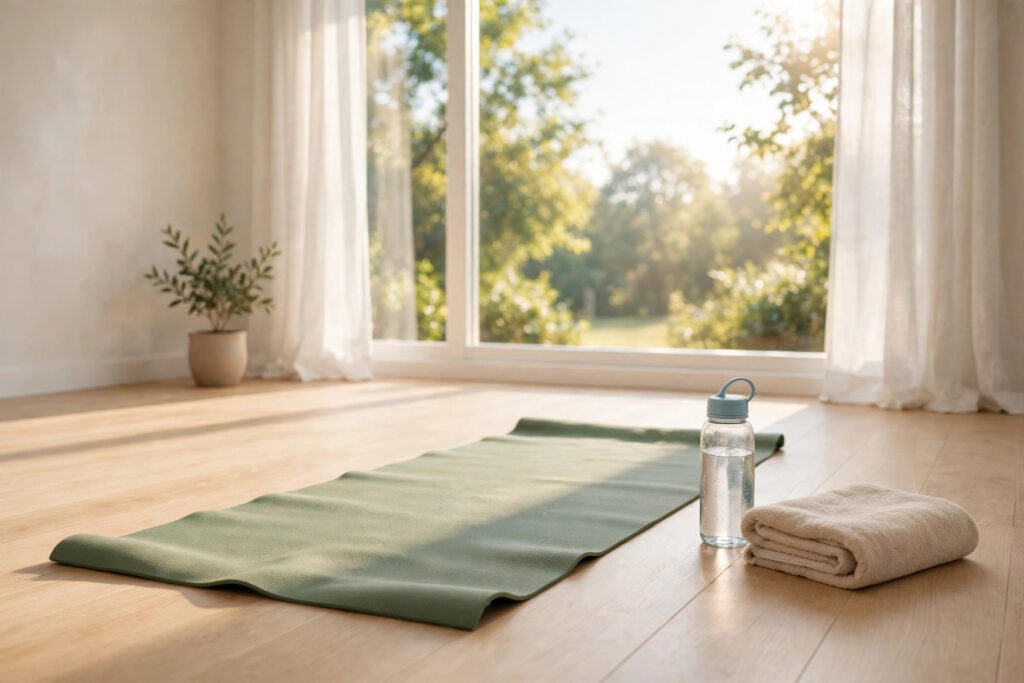
You do not need a gym membership, fancy equipment or a large house to get fit. A simple home workout routine, done consistently, can build strength, improve stamina and lift your mood — and it costs nothing. This guide gives beginners in Pakistan a practical 20-minute no-equipment plan you can do in your bedroom, lounge or rooftop, plus tips for staying consistent in our climate and daily routine.
Why Home Workouts Work So Well in Pakistan
Gym fees, travel time and busy schedules stop many people from exercising. Home workouts remove all three excuses. You can train early in the morning before work or university, or in the evening after dinner, without leaving the house. For women who prefer privacy, home workouts are especially convenient. And during hot summer months, you can exercise indoors with a fan on, early in the morning or late in the evening, instead of walking in the heat.
Before You Start: Safety Basics
- Check with a doctor first if you have a heart condition, joint problems, diabetes, high blood pressure, or you have not exercised in years.
- Wear comfortable clothes — a shalwar kameez works for light exercise, but a t-shirt and trousers or track pants give you more freedom to move.
- Use a mat or a thick chadar on a hard floor to protect your knees and back.
- Keep water nearby and sip throughout. In summer, drink a glass of water before you start and keep another one ready.
- Stop if you feel sharp pain, dizziness or chest discomfort. Mild muscle tiredness is normal; sharp pain is a signal to stop.
The 5-Minute Warm-Up
Never skip the warm-up — cold muscles are more likely to get strained. Do each move gently for about one minute:
- March in place — lift your knees and swing your arms.
- Arm circles — small circles forward, then backward.
- Leg swings — hold a chair or wall for balance and swing each leg gently.
- Neck and shoulder rolls — slow, relaxed circles.
- Gentle squats — shallow squats to wake up your legs.
The 20-Minute Beginner Routine
Do each exercise for 30 seconds, rest for 15 seconds, then move to the next. Complete the full circuit twice for a 20-minute workout, or once for a gentle 10-minute start. Rest for one minute between circuits.
1. Squats
Stand with feet shoulder-width apart. Bend your knees and push your hips back as if sitting on a chair, keeping your chest up. Return to standing. Squats strengthen your legs and glutes and help with everyday movements like climbing stairs.
2. Wall Push-Ups
Stand facing a wall, place your hands on it at shoulder height, and step back. Bend your elbows to bring your chest toward the wall, then push back. This is the beginner-friendly version of a push-up and builds chest, shoulder and arm strength. When it gets easy, move to knee push-ups on the floor.
3. Standing Knee Raises
Stand tall and lift one knee toward your chest, then the other, alternating at a steady pace. This warms up your core and improves balance and coordination.
4. Glute Bridges
Lie on your back with knees bent and feet flat on the floor. Lift your hips until your body forms a straight line from shoulders to knees, squeeze your glutes, then lower slowly. This strengthens your lower back and hips — helpful if you sit for long hours studying or working.
5. Plank
Rest on your forearms and toes, keeping your body in a straight line. Hold for 20 to 30 seconds. Do not let your hips sag or rise too high. The plank builds core strength, which protects your back.
6. Step-Ups
Use a low, sturdy step or the bottom stair of your home staircase. Step up with one foot, then the other, then step back down. Alternate the leading foot. This is excellent for leg strength and stamina.
7. Bird-Dog
On hands and knees, extend your right arm forward and left leg back, hold briefly, then switch sides. This improves balance and strengthens your core and back.
8. Cool-Down Stretches
Finish with five minutes of gentle stretching: touch your toes softly, stretch each arm across your chest, stretch your quadriceps by holding one foot behind you (hold a wall for balance), and take slow deep breaths. Stretching helps reduce next-day soreness.
A Simple Weekly Plan
- Monday: Full routine (two circuits).
- Tuesday: Walk for 20–30 minutes, or a gentle single circuit.
- Wednesday: Full routine.
- Thursday: Rest or light stretching.
- Friday: Full routine.
- Saturday: A fun activity — walk in a park, play cricket with friends, or cycle.
- Sunday: Rest.
Three workout days per week is enough to start. After three to four weeks, when the routine feels easy, increase to three circuits, hold planks longer, or move from wall push-ups to knee push-ups.
Common Beginner Mistakes to Avoid
- Doing too much on day one. Soreness the next day is normal, but extreme pain means you pushed too hard. Build up gradually.
- Skipping rest days. Muscles recover and grow stronger on rest days, not during the workout itself.
- Comparing yourself to others. Fitness influencers online have trained for years. Your only competition is your yesterday.
- Being inconsistent. Three short workouts every week beat one exhausting workout once a month.
- Holding your breath. Breathe naturally — exhale on the effort, inhale as you relax.
Staying Consistent: Tricks That Actually Work
Set a fixed time, like right after Fajr or before dinner, and treat it like an appointment. Exercise with a family member or friend to stay accountable, and track your progress in a notebook or phone note. Missing one day is not failure — just restart the next day.
Frequently Asked Questions
How long before I see results from home workouts?
Most beginners feel stronger and more energetic within three to four weeks of regular exercise. Visible changes in stamina and muscle tone usually take six to eight weeks. Consistency matters more than intensity.
Do I need to buy equipment to progress?
No. Bodyweight exercises can keep you progressing for months by increasing repetitions, slowing movements down, or trying harder variations like full push-ups and single-leg squats. Equipment is optional, not essential.
What is the best time to work out in Pakistan?
Early morning or evening works best, especially in summer when midday heat is intense. The best time is simply the time you can stick to every day.
Can women work out at home in Pakistan?
Absolutely. Home workouts are private, need no special clothing beyond comfortable dress, and can be done in any room. Many women in Pakistan start their fitness journey exactly this way.
Conclusion
Fitness does not require a gym, money or perfect conditions — just twenty minutes, a little floor space and the decision to start. Follow this routine three times a week, be patient with yourself, and you will feel the difference in your energy, strength and mood. Start today, even with just one circuit, and build from there. Your future self will thank you.