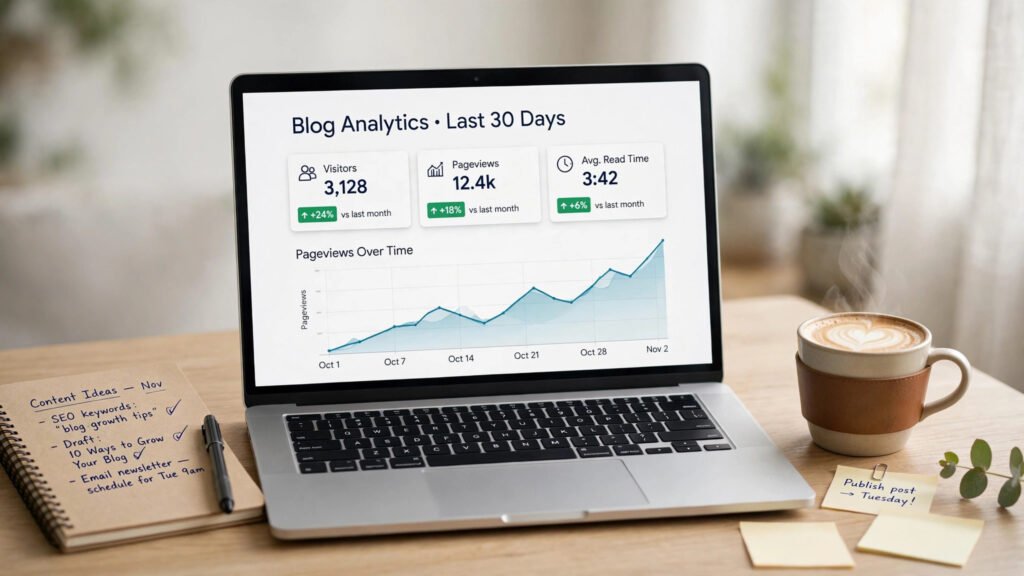
Every blogger remembers the quiet early days. You publish a helpful article, check your stats, and find only a handful of visitors — sometimes none at all. That silence is normal, and it does not mean your blog is failing. The first 1,000 readers are the hardest to earn because nobody knows your blog exists yet. After that first thousand, growth gets easier as Google trusts your site and readers share your posts. This guide explains practical, free methods Pakistani beginners can use to reach their first 1,000 readers, without paid ads or risky shortcuts.
Why the First 1,000 Readers Are the Hardest
A new blog has no history, no backlinks, and no regular audience. Google takes time to discover and trust new websites, so search traffic is slow at first. Social media also works slowly, because you are building an audience from zero. Early growth is slow for everyone, in every country. The bloggers who succeed are usually the ones who keep publishing useful content and promoting it consistently for several months. Your first 1,000 readers are proof that real people value your work, and they teach you what your audience actually wants. Treat that milestone as a learning phase, not a race.
1. Write for One Clear Reader
Before writing your next post, decide exactly who it is for. A post written for “everyone in Pakistan” usually helps no one. A post written for a first-year university student in Lahore who wants to learn freelancing, or a mother in Karachi looking for affordable school lunch ideas, is far more useful. When you know your reader, you choose better examples, simpler language, and more practical advice. Readers return when they know what to expect from you.
2. Answer Questions People Actually Search
Your fastest route to readers is answering real questions. Think about what people in Pakistan type into Google every day: how to apply for a scholarship, how to save mobile data, or how to prepare for an exam. Write one clear article per question, use the question as your heading, and answer it directly in the first paragraph. Articles that solve a specific problem get shared more often and rank more easily than broad essays with no clear purpose.
3. Share Where Pakistanis Already Spend Time
Publishing is only half the job; the other half is letting people know the article exists. Facebook remains one of the most effective free channels in Pakistan. Share your post on your own profile and in groups where the topic is genuinely relevant, with a short honest introduction explaining what the article covers. WhatsApp is equally powerful: share new posts as your Status, and send them to friends or family groups when the topic truly helps them. The key is relevance. Sharing a cricket guide in a cooking group annoys people; sharing it where cricket fans gather brings real readers who stay and read.
4. Use WhatsApp and Facebook Groups Honestly
Groups can bring hundreds of readers, but only if you respect them. Read the group rules before posting, and never post the same link in ten groups within minutes — that looks like spam and gets you removed. Instead, join two or three groups related to your topic and take part in conversations first. Answer questions, comment helpfully, and share your article only when it directly answers something someone asked. One genuine recommendation from a group member is worth more than a dozen forced shares.
5. Make Google Your Long-Term Friend
Social media brings quick visitors, but Google brings steady ones. Set up Google Search Console, which is free, and submit your sitemap so Google can find your posts. Write clear titles that include the words people search for, and add a short meta description to every post. Link your own related posts together, because internal links help Google understand your site and keep visitors reading longer. Most importantly, update your best posts when information changes. A guide that stays accurate keeps earning readers month after month, while an outdated one slowly disappears from results.
6. Turn One-Time Visitors Into Returning Readers
Getting a reader once is good; getting them back is better. Add a simple way for visitors to follow your blog, such as an email signup or a WhatsApp channel link. End every article with a clear next step, like a related guide they should read next. Publish on a regular schedule — even one good post a week is enough — so readers learn to expect new content from you. Returning readers also signal to Google that your blog is worth showing to more people.
A Simple 30-Day Plan to Start
You do not need a complicated strategy. In your first month, publish four helpful articles that answer real questions. Share each one on Facebook, WhatsApp Status, and one other platform. Spend thirty minutes a week answering questions in relevant groups, linking your article only when it fits. Check Google Search Console weekly to see which posts get clicks, then write more on the topics that work. Repeat this cycle and track your progress weekly.
Frequently Asked Questions
How long does it take to get 1,000 blog readers in Pakistan?
For most beginners publishing one good post a week, it takes three to six months. It depends on your topic, how often you publish, and how actively you share your work.
Do I need to spend money on ads to get my first readers?
No. Free promotion through Facebook groups, WhatsApp, and Google search is enough for the first thousand readers. Paid ads can help later, but they cannot fix weak content, so focus on quality first.
How many posts should I publish before expecting traffic?
Aim for at least ten to twenty useful posts. A blog with only two or three articles gives visitors little reason to stay or return, while a blog with twenty helpful guides looks like a real resource worth bookmarking.
Should I write in English or Urdu?
Both work. English reaches a wider audience, including readers outside Pakistan, while Roman Urdu often connects better with local readers. Choose the language your target readers prefer, and stay consistent.
Conclusion
Your first 1,000 readers will not arrive overnight, but they will arrive if you publish helpful content, share it where real people gather, and keep going when the numbers look small. Focus on one clear audience, answer questions people actually search for, and treat Google and social media as partners rather than shortcuts. Yours can follow the same path — one reader, one share, and one useful article at a time.