The Pakistani sun is strong for most of the year, and anyone who spends time outdoors knows how quickly a tan appears. The face darkens and the hands show a clear line where the sleeves end. A tan is the skin’s response to sunlight: it produces more melanin to protect itself from ultraviolet rays. It is not harmful, but most people want their even skin tone back before a wedding, an interview, or Eid.
The good news: simple, natural remedies from almost every Pakistani kitchen can gradually restore your complexion — gradually being the key word, since no home remedy removes a tan overnight.
What Causes Tanning in Pakistan
Pakistan’s climate plays a big role: strong sunlight for most months of the year, high UV levels during the middle of the day, and long hours spent outdoors by students, workers, and commuters.
A tan forms when ultraviolet rays trigger melanin production in the skin. The most exposed areas — face, neck, forearms, and the backs of the hands — tan the most. Removing a tan without protecting the skin afterwards is pointless: the same sun will simply tan you again.
Natural Remedies That Actually Help
Yogurt and Besan Mask
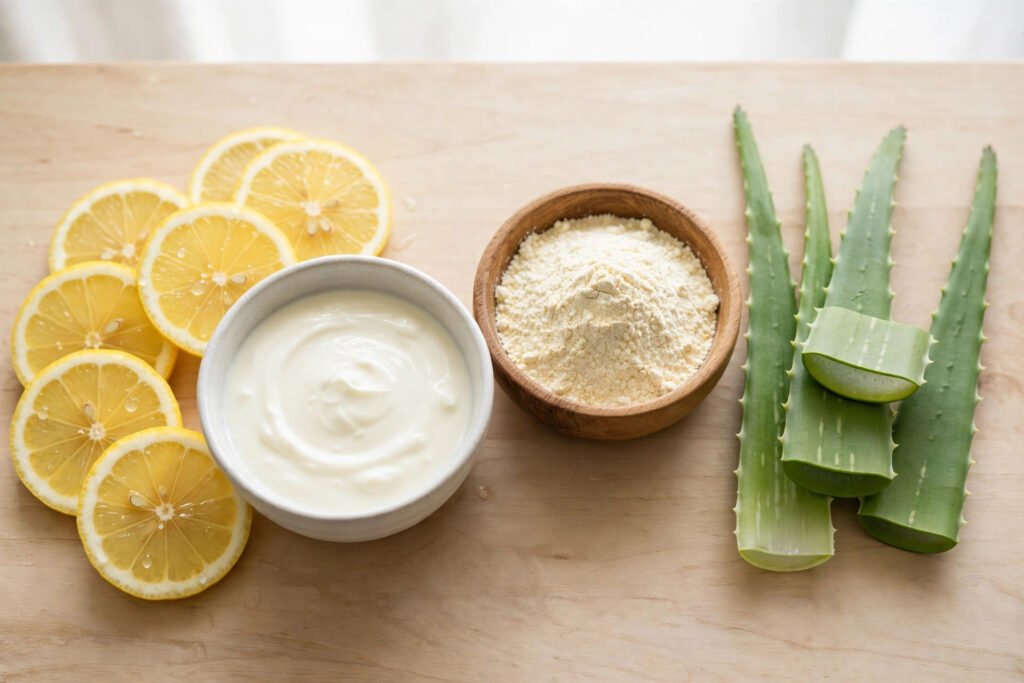
This classic desi remedy remains one of the most reliable. Besan gently exfoliates dead, tanned skin cells, while yogurt contains lactic acid, which helps brighten the skin over time and keeps it soft. Mix two tablespoons of besan with two tablespoons of plain yogurt and a pinch of turmeric. Apply it to the tanned areas, leave it for 15 to 20 minutes, then rub it off gently with wet fingers and rinse with lukewarm water. Use it two or three times a week.
Lemon and Honey
Lemon is a natural brightening agent thanks to its vitamin C, while honey soothes and moisturises. This works well on the hands and arms, where the skin is tougher. Mix one tablespoon of lemon juice with one tablespoon of honey, apply to the tanned areas, and wash off after 15 minutes. Use it in the evening only — lemon makes skin more sensitive to sunlight, so never apply it and then go out in the sun. If your skin stings or turns red, wash it off and skip this remedy.
Aloe Vera Gel
Aloe vera is widely grown in Pakistani homes, and its gel is one of the gentlest options for tanned skin. It cools sun-exposed skin, supports natural repair, and keeps the skin hydrated. Apply fresh gel from the leaf, or a plain fragrance-free store-bought gel, to the tanned areas before bed and leave it on overnight. Wash with plain water in the morning. It suits almost all skin types, including sensitive skin.
Potato Juice
Potato juice is a traditional remedy many Pakistani households swear by. Potatoes contain natural enzymes and vitamin C that help lighten tanned skin gradually. Grate a raw potato and squeeze out the juice through a clean cloth. Apply it to the face and hands with a cotton ball, leave it for 15 to 20 minutes, and rinse. Use daily for best results.
Ubtan — The Traditional Remedy
Ubtan has been used in Pakistani homes for generations, especially before weddings. A simple version uses besan, a pinch of turmeric, a little milk or rose water, and a few drops of lemon juice. Apply it as a paste, let it dry for 15 minutes, and scrub it off gently while rinsing. Use it twice a week rather than daily, because over-exfoliating can irritate the skin.
A Simple Weekly Routine
Remedies work best when used consistently. A practical routine: wash your face twice a day with a gentle cleanser, apply aloe vera gel at night, and moisturise daily. Two to three times a week, use the besan and yogurt mask or ubtan on the face, neck, and hands. Use the lemon and honey remedy on the hands and arms in the evening only. Every morning, apply sunscreen before leaving home — this protects all the progress you make with the remedies.
Sun Protection: Stopping the Tan From Returning
Removing a tan while continuing to expose your skin to strong sun is like filling a bucket with a hole in it. Use a broad-spectrum sunscreen every day on the face, neck, and hands, applied at least 15 minutes before going out and reapplied if you sweat heavily. Cover up when you can: full sleeves, a cap or dupatta, and sunglasses protect the areas that tan most, and motorcycle riders should consider gloves and a full-face helmet visor. The sun is strongest between late morning and mid-afternoon, so schedule outdoor work outside these hours where possible, and stay hydrated — water keeps the skin healthy and supports its natural repair.
Mistakes to Avoid
Many people damage their skin while trying to remove a tan. Avoid harsh scrubs used daily, strong bleaching creams from unverified sources, and remedies applied too often. Never apply lemon juice and then go out in the sun — this can cause irritation and dark patches. Be careful with whitening creams sold without proper labelling in local markets; some contain harmful ingredients that can damage the skin permanently. Over-scrubbing strips the skin’s natural barrier and can make pigmentation worse.
When to See a Skin Specialist
Home remedies suit ordinary sun tanning. But if you notice dark patches that do not fade, uneven pigmentation that appeared suddenly, moles that change in size or colour, itching, blistering, or a rash after sun exposure, consult a dermatologist. A specialist can identify conditions such as melasma or sun allergy, which need proper medical treatment rather than home remedies.
FAQ
How long does it take to remove a tan naturally?
With regular remedies and proper sun protection, most people see visible improvement in three to four weeks. A deep tan built over months of sun exposure can take longer.
Can I remove a tan from my hands and face at the same time?
Yes. The remedies here work on both. The skin on the hands is tougher, so it tolerates slightly stronger treatments like lemon and honey, while the face needs gentler options such as yogurt masks and aloe vera.
Does sunscreen really prevent tanning in Pakistan?
Yes, when used correctly. Apply enough sunscreen, cover all exposed areas, and reapply after sweating or spending extended time outdoors. Combining sunscreen with covering up gives the best protection.
Is ubtan safe for all skin types?
Ubtan is generally safe, but people with very sensitive or acne-prone skin should use a milder version without lemon and test it on a small area first. If any remedy causes redness, itching, or a rash, stop using it.
Conclusion
Removing a tan in Pakistan does not require expensive products or salon visits. Simple, natural remedies — besan and yogurt, aloe vera, potato juice, and the traditional ubtan — can gradually restore your even skin tone when used regularly. But the remedies are only half the story. Daily sunscreen, covering up, and avoiding the harshest midday sun are what keep the tan from returning. Start with two or three remedies that suit your skin, follow them patiently for a month, and protect your skin every day.