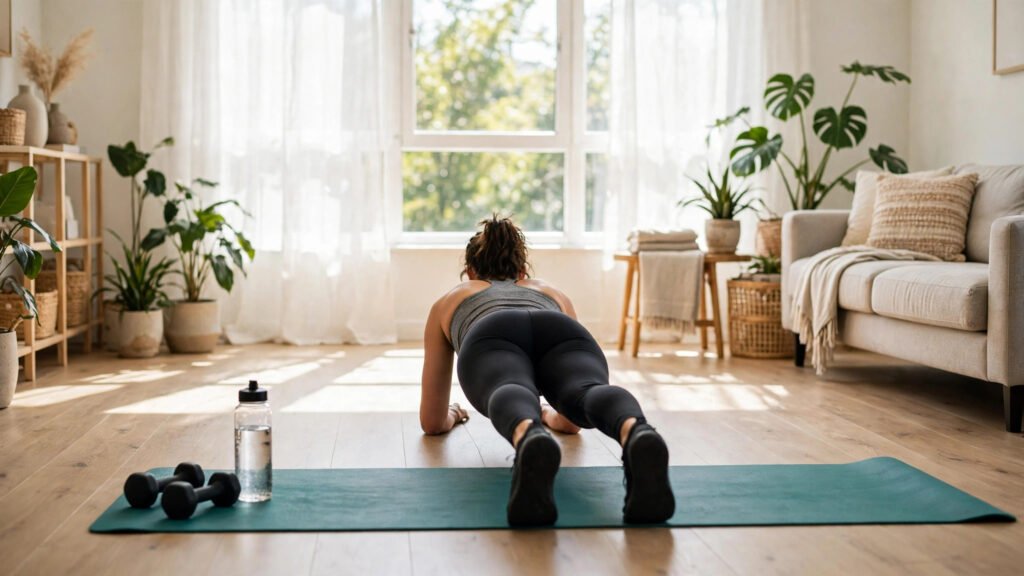
You do not need a gym membership to lose weight. For most people in Pakistan, the biggest barrier is not knowledge — it is finding a routine that fits into a busy day, a small home and a tight budget. A simple set of home exercises, done regularly, can burn calories, build strength and improve your energy without any equipment at all.
This guide gives you a beginner’s home exercise routine for weight loss, explains how each move helps, and covers the diet and consistency habits that actually decide whether the weight comes off.
Before You Start
If you have a medical condition, joint pain, high blood pressure or you have not exercised in years, talk to a doctor before starting a new routine. Start slowly, warm up every time, and stop if something hurts — pain is your body telling you to rest, not to push harder.
Wear comfortable clothes and sports shoes if you have them. A thin mat, a towel or even a clean chaddar on the floor is enough for floor exercises. You need a space about the size of a prayer mat — that is all.
The Beginner’s Routine
Do this routine three to four times a week, with a rest day between sessions. It takes about 25 to 30 minutes. As you get fitter, add more rounds rather than longer workouts.
1. Brisk Walking in Place — 5 Minutes
Start by marching or walking briskly in place, lifting your knees high and swinging your arms. It warms up your muscles, raises your heart rate gently and gets your body ready. If you have a rooftop or a street nearby, a 10-minute brisk walk outside works even better.
2. Jumping Jacks — 30 Seconds
Jumping jacks are a simple full-body move that burns calories quickly. Jump your feet apart while raising your arms overhead, then jump back together. If jumping hurts your knees, step side to side instead — you still get the benefit without the impact.
3. Bodyweight Squats — 12 Repetitions
Stand with your feet shoulder-width apart, push your hips back and bend your knees as if sitting on a chair, then stand up again. Squats work the biggest muscles in your body — your thighs and glutes — which means they burn more calories than small-muscle exercises. Keep your chest up and your knees pointing in the same direction as your toes.
4. Push-Ups — 8 to 10 Repetitions
Push-ups build your chest, shoulders, arms and core. If full push-ups are too hard, do them on your knees — that still counts and still builds strength. Keep your body in a straight line from head to heels, and lower yourself slowly.
5. Lunges — 10 Repetitions (5 Each Leg)
Step forward with one leg, lower your back knee toward the floor, then push back to standing. Lunges strengthen your legs and improve your balance. Hold on to a chair for support if you need it at first.
6. Plank — 20 to 30 Seconds
Rest on your forearms and toes with your body in a straight line, and hold. The plank strengthens your core, which supports your back and improves your posture. Do not let your hips sag or rise — a straight line is the whole point.
7. Mountain Climbers — 30 Seconds
From a push-up position, drive your knees toward your chest one at a time, quickly. Mountain climbers raise your heart rate and work your core and legs at the same time. Go at a steady pace rather than rushing.
8. Skipping Without a Rope — 1 Minute
Pretend to skip with an imaginary rope, bouncing lightly on the balls of your feet. Skipping is one of the best calorie-burning exercises there is, and it needs no space. If you have a real rope, even better.
Rest for one minute, then repeat the whole circuit once or twice more. Finish with five minutes of slow walking and gentle stretching.
How to Make It Work for Weight Loss
Exercise alone rarely causes major weight loss — food matters just as much. The exercise burns calories and builds muscle, but if you eat more than you burn, the weight stays. You do not need a strict diet, but a few changes make a big difference.
Eat smaller portions of roti, rice and fried food, and fill half your plate with vegetables and salad. Drink water instead of soft drinks and sweetened chai. Avoid late-night snacking, and try not to eat a heavy meal right before bed. These are small changes, but over weeks they add up.
Consistency matters more than intensity. Three moderate workouts a week for three months will do far more than one exhausting week followed by giving up. Pick fixed days and times, and treat them like appointments you cannot miss.
Common Mistakes to Avoid
The most common mistake is doing too much too soon. Sore muscles for a day or two are normal when you start, but if you cannot walk properly for a week, you overdid it. Build up gradually.
Finally, do not weigh yourself every day. Weight goes up and down with water, food and hormones. Weigh yourself once a week, at the same time, and judge progress over a month, not a day.
Staying Motivated at Home
Exercise with a family member if you can — it is harder to skip a workout when someone is waiting for you. Track your progress in a notebook: how many squats you did, how long you held the plank. Seeing the numbers improve is powerful motivation.
Frequently Asked Questions
How long does it take to see weight loss results from home exercise?
Most people notice more energy and better sleep within two weeks, and visible weight change within four to eight weeks if they also watch their food. Healthy weight loss is about half a kilogram to one kilogram per week.
Can I lose belly fat with home exercises alone?
No exercise targets belly fat specifically — your body decides where fat comes off. A mix of full-body exercise and sensible eating reduces overall body fat, and belly fat comes down with it over time.
Do I need any equipment for weight loss at home?
No. Bodyweight exercises are enough to start. Later, a skipping rope and a pair of dumbbells are useful, but they are optional, not essential.
Is it safe to exercise at home in summer heat?
Yes, if you exercise early in the morning or in the evening, drink water before and after, and stop if you feel dizzy. Avoid exercising in a hot, closed room in the afternoon.
Conclusion
Weight loss at home is simple, even if it is not easy: a short routine of squats, push-ups, lunges, planks and skipping, three or four times a week, plus smaller portions and more water. You need no gym, no equipment and no expensive diet plan. Start with this routine today, keep at it for a month, and let the results speak for themselves.